




- Normal Early Pregnancy Timeline on Transvaginal Ultrasound
- SRU 2024 Lexicon: Terms That Changed
- Dating: Use CRL, Not Mean Sac Diameter
- Early Pregnancy Loss: Diagnostic vs Concerning Findings
- Prognostic Findings in a Continuing Early Pregnancy
- No Intrauterine Pregnancy Seen: PUL and Ectopic Pregnancy
- After a Loss: Incomplete EPL and Enhanced Myometrial Vascularity
- Gestational Trophoblastic Disease in the First Trimester
- Multiple Pregnancy: Settle Chorionicity Now
- First-Trimester Ultrasound Reporting Checklist
- Related Calculators and Cases
- Frequently Asked Questions
- References
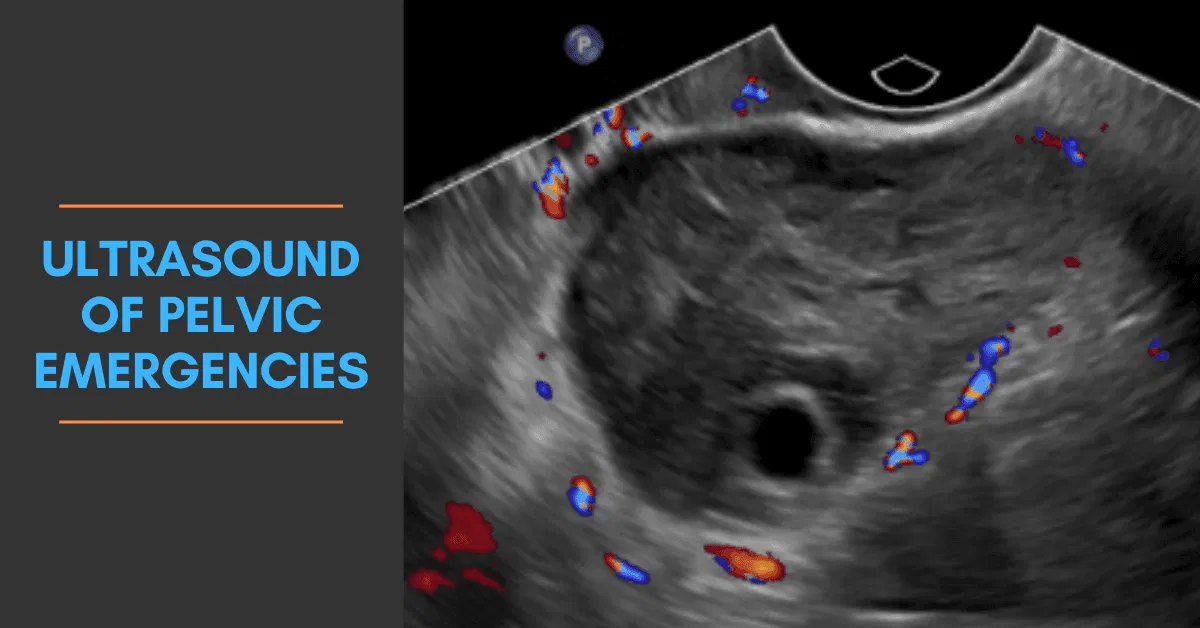
Early pregnancy ultrasound is the transvaginal scan performed in the first trimester to answer three questions in order: where is the pregnancy implanted, how many weeks is it, and is it developing normally. Almost every reporting error in this trimester comes from answering the second or third question before the first one is settled.
This page is a working reference for the normal transvaginal landmarks week by week, the crown-rump length (CRL) dating rules, the diagnostic thresholds for early pregnancy loss, and the ectopic pitfalls that follow when no intrauterine pregnancy is seen. The terminology throughout follows the 2024 Society of Radiologists in Ultrasound (SRU) first-trimester lexicon, which replaced several terms that are still in daily use [1].
| Question | What answers it | If unanswered |
|---|---|---|
| Where is it implanted? | Gestational sac completely surrounded by endometrium, plus a yolk sac or embryo | Pregnancy of unknown location (PUL): work up as possible ectopic |
| How many weeks? | CRL once an embryo is measurable; mean sac diameter (MSD) only before that | Suboptimally dated pregnancy: affects every later scan |
| Is it developing normally? | Cardiac activity, CRL and MSD against thresholds, yolk sac, amnion | Concerning for early pregnancy loss: repeat scan, never a same-day call |
Normal Early Pregnancy Timeline on Transvaginal Ultrasound
Structures appear in a fixed sequence. The gestational sac grows at roughly 1 mm per day in mean sac diameter and the embryo at roughly 1 mm per day in CRL, so a landmark that is more than a few days "late" is the finding, not the gestational age estimate [6].
| Gestational age (from LMP) | Typical MSD / CRL | Structure seen on TVS | Reporting note |
|---|---|---|---|
| 4.5–5.0 weeks | MSD 2–5 mm | Probable gestational sac | Round or oval fluid collection eccentric within the decidua. No yolk sac yet, so it is only probable |
| 5.0–5.5 weeks | MSD 5–10 mm | Yolk sac | Yolk sac makes it a definite intrauterine pregnancy. Normal diameter is under 6 mm |
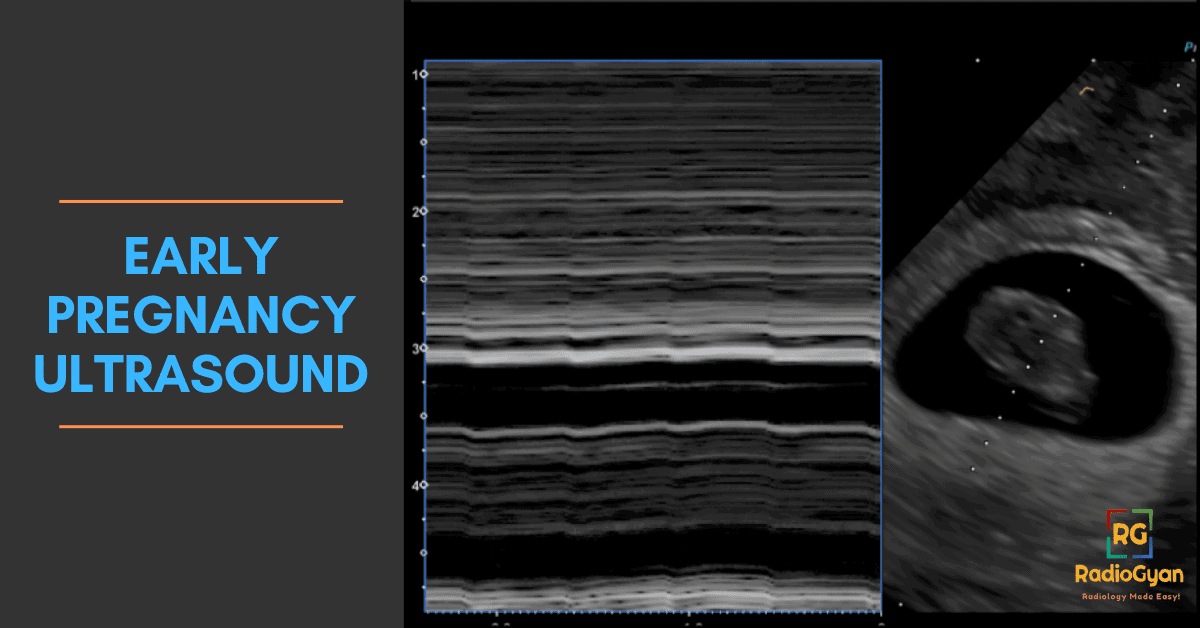
| 5.5–6.0 weeks | CRL 1–4 mm | Embryo with cardiac activity | Cardiac activity is usually detectable once CRL reaches about 2 mm; absence at CRL under 7 mm is not diagnostic |
| 7 weeks | CRL ~10 mm | Amnion | Thin membrane closer to the embryo than the chorion. An empty amnion (amnion visible, no embryo) is an ominous sign |
| 8–12 weeks | CRL 15–55 mm | Physiological midgut herniation | Normal until 12 weeks. Do not report as an abdominal wall defect before then |
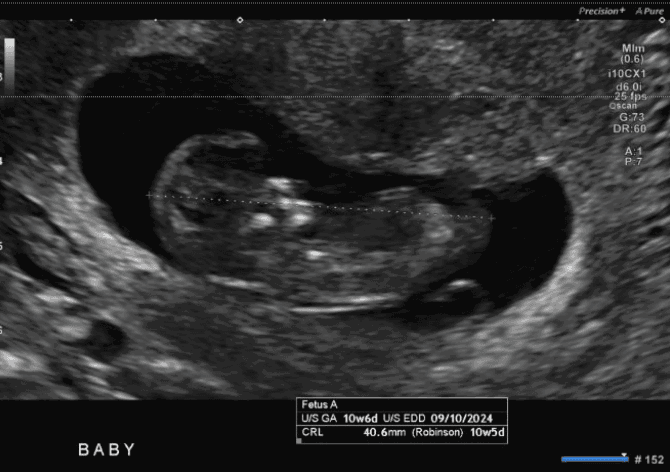
| 11 weeks 0 days onward | CRL 45 mm and above | Fetus (term changes from embryo) | SRU 2024: embryo up to 10 weeks 6 days, fetus from 11 weeks 0 days [1] |
Signs That Confirm an Intrauterine Location
- Intradecidual sign: a small sac embedded eccentrically in one side of a thickened decidua, with the endometrial stripe passing intact alongside it.
- Double decidual sac sign: two concentric echogenic rings (decidua capsularis and decidua parietalis) separated by a thin hypoechoic line.
- Sliding sign: gentle probe pressure moves the collection within the cavity. A true implanted sac does not slide; intracavitary fluid does.
Both decidual signs are supportive, not required. SRU 2024 is explicit that a round or oval intrauterine fluid collection in a patient with a positive pregnancy test is a probable gestational sac even when neither sign is present [1]. Equally important, the term pseudosac is retired: a pointed, centrally located collection that follows the cavity contour should be reported as intracavitary fluid, because calling it a "sac" has caused ectopic pregnancies to be missed.
SRU 2024 Lexicon: Terms That Changed
The 2024 multisociety consensus rewrote first-trimester vocabulary so that reports mean the same thing to radiologists, obstetricians and patients. The measurement thresholds did not change, only the words [1].
| Retired term | Recommended term | Why it changed |
|---|---|---|
| Fetal pole, embryonic pole | Embryo (to 10w6d), fetus (from 11w0d) | Anatomically accurate and unambiguous about timing |
| Heartbeat, heart motion | Cardiac activity | The four-chambered heart is not formed at 6 weeks |
| Viable, non-viable, living | Avoid in first-trimester reports | Misstates cardiac development and is open to non-clinical misuse |
| Pseudosac, pseudogestational sac | Intracavitary fluid | "Sac" wording has led to missed ectopic pregnancies |
| Blighted ovum | Anembryonic pregnancy | Descriptive rather than colloquial |
| Missed abortion | Embryonic demise or fetal demise | Separates the loss from the gestational age at which it occurred |
| Pregnancy failure | Early pregnancy loss (EPL) | Patient-centred, and matches obstetric literature |
| Suspicious for pregnancy failure | Concerning for EPL | Signals uncertainty without implying a diagnosis |
| Retained products of conception | Incomplete EPL (RPOC optional) | Aligns the imaging term with the clinical event |
| Cornual pregnancy | Interstitial ectopic pregnancy | "Cornual" has been used for two different things |
| Cesarean scar pregnancy | Cesarean scar ectopic pregnancy | SRU 2024 classifies scar implantation as ectopic |
| Blob sign, bagel sign, donut sign | Tubal ring or extraovarian mass | Plain description travels better between specialties |
| Viability scan | First-trimester ultrasound or early pregnancy ultrasound | Describes the examination, not a verdict |
Dating: Use CRL, Not Mean Sac Diameter
Ultrasound in the first trimester is the most accurate way to establish gestational age, with CRL accurate to about ±5–7 days up to 13 weeks 6 days. ACOG, AIUM and SMFM state plainly that mean sac diameter should not be used to estimate the due date: it is only a rough age estimate before the embryo is measurable [5].
- Measure CRL in a true midsagittal plane, with the embryo in neutral position and the spine and genital tubercle in view.
- Use the mean of three discrete measurements where possible.
- Above a CRL of 84 mm (about 14 weeks 0 days), switch to biparietal diameter, head circumference, abdominal circumference and femur length.
- For pregnancies conceived by ART, use the embryo age and transfer date, not ultrasound biometry.
| Gestational age at scan | Measurement | Redate if ultrasound differs from LMP by |
|---|---|---|
| Up to 8 weeks 6 days | CRL | More than 5 days |
| 9 weeks 0 days to 13 weeks 6 days | CRL | More than 7 days |
| 14 weeks 0 days to 15 weeks 6 days | BPD, HC, AC, FL | More than 7 days |
| 16 weeks 0 days to 21 weeks 6 days | BPD, HC, AC, FL | More than 10 days |
| 22 weeks 0 days to 27 weeks 6 days | BPD, HC, AC, FL | More than 14 days |
Early Pregnancy Loss: Diagnostic vs Concerning Findings
The thresholds below come from the 2013 SRU multispecialty panel published in the New England Journal of Medicine [2] and are carried forward unchanged in the 2024 lexicon [1]. They are deliberately conservative: the cut-offs were set so that no normal pregnancy is called a loss, at the cost of asking some patients to return.
The reason is measurement error. Pexsters and colleagues showed that intra- and interobserver variability in MSD and CRL at 6–9 weeks is wide enough that the older 5 mm CRL and 16 mm MSD cut-offs could misclassify a normal pregnancy [4]. Preisler and colleagues then tested the newer thresholds prospectively in over 2,800 pregnancies and confirmed 100% specificity for CRL 7 mm and MSD 25 mm [3].
| Category | Finding | Action |
|---|---|---|
| Diagnostic of early pregnancy loss | CRL 7 mm or more with no cardiac activity | Report as embryonic demise |
| Diagnostic | MSD 25 mm or more with no embryo | Report as anembryonic pregnancy |
| Diagnostic | No embryo with cardiac activity 2 weeks or more after a scan showing a gestational sac without a yolk sac | Report as EPL |
| Diagnostic | No embryo with cardiac activity 11 days or more after a scan showing a gestational sac with a yolk sac | Report as EPL |
| Concerning for EPL | CRL under 7 mm with no cardiac activity | Repeat scan, typically 7–10 days |
| Concerning for EPL | MSD 16–24 mm with no embryo | Repeat scan |
| Concerning for EPL | Empty amnion (amnion seen adjacent to a yolk sac, no embryo) | Repeat scan |
| Concerning for EPL | Enlarged yolk sac, more than 7 mm | Repeat scan |
| Concerning for EPL | Small sac relative to embryo (MSD minus CRL under 5 mm) | Repeat scan |
| Concerning for EPL | No embryo 6 weeks or more after the last menstrual period | Repeat scan |
| Concerning for EPL | No embryo with cardiac activity 7–13 days after a sac without a yolk sac, or 7–10 days after a sac with a yolk sac | Repeat scan |
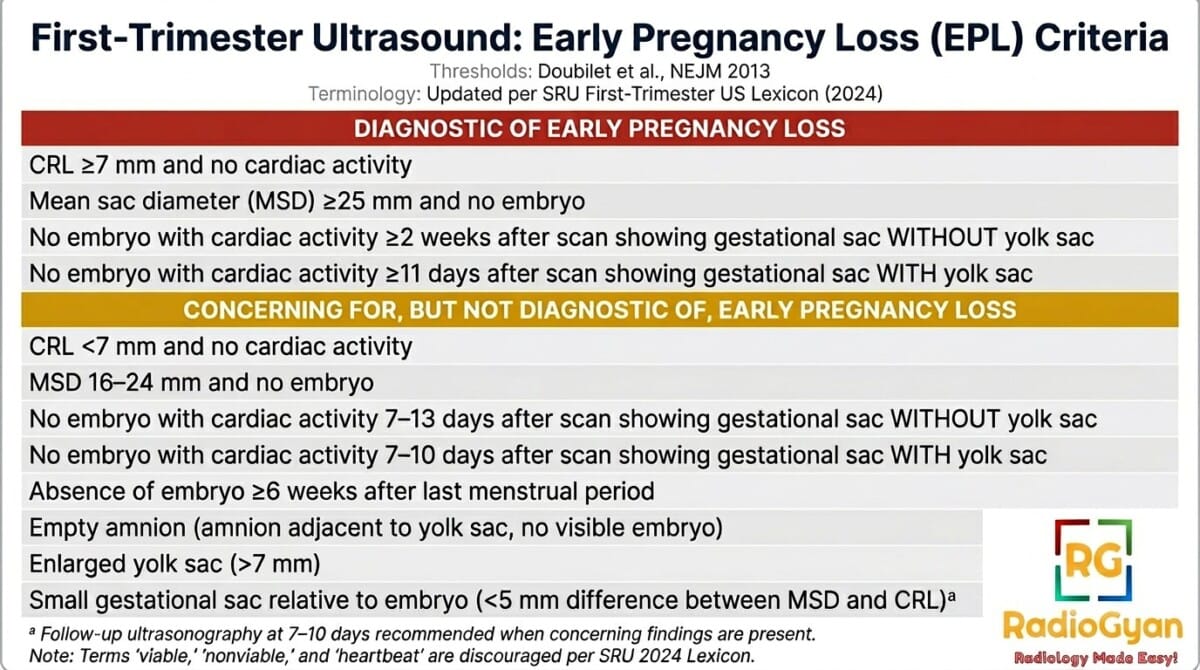
Practical rule: a single scan that does not meet a diagnostic criterion never justifies intervention. If the report says "concerning for EPL", it must also say when to rescan.
Prognostic Findings in a Continuing Early Pregnancy
These findings do not diagnose a loss. They change the probability, and they belong in the report because they shape counselling and follow-up interval.
| Finding | Threshold | Reported association | Ref |
|---|---|---|---|
| Yolk sac visualised | Any | Roughly fourfold better odds of a good first-trimester outcome once a yolk sac is seen | [7] |
| Enlarged yolk sac | More than 6 mm (SRU normal); more than 7 mm on the concerning list | Higher miscarriage rate; irregular or calcified shape adds risk | [1,2] |
| Slow embryonic heart rate | Under 100 bpm at 6.0–7.0 weeks | About 25% first-trimester demise even if the rate normalises by 8 weeks | [8] |
| Slow heart rate, very early | Under 100 bpm at or before 6.1 weeks | Not by itself ominous at this stage: recheck rather than counsel | [9] |
| Subchorionic haematoma | Any; risk tracks with size and earlier detection | Spontaneous abortion rises from about 8.9% to 17.6% (pooled OR 2.18) | [10] |
| Chorionic bump | Focal convex bulge into the sac from the choriodecidual surface | Pooled live birth rate about 62%, rising to about 83% when the pregnancy is otherwise normal | [11] |
| Small sac relative to embryo | MSD minus CRL under 5 mm | Substantially increased loss rate | [2] |
No Intrauterine Pregnancy Seen: PUL and Ectopic Pregnancy
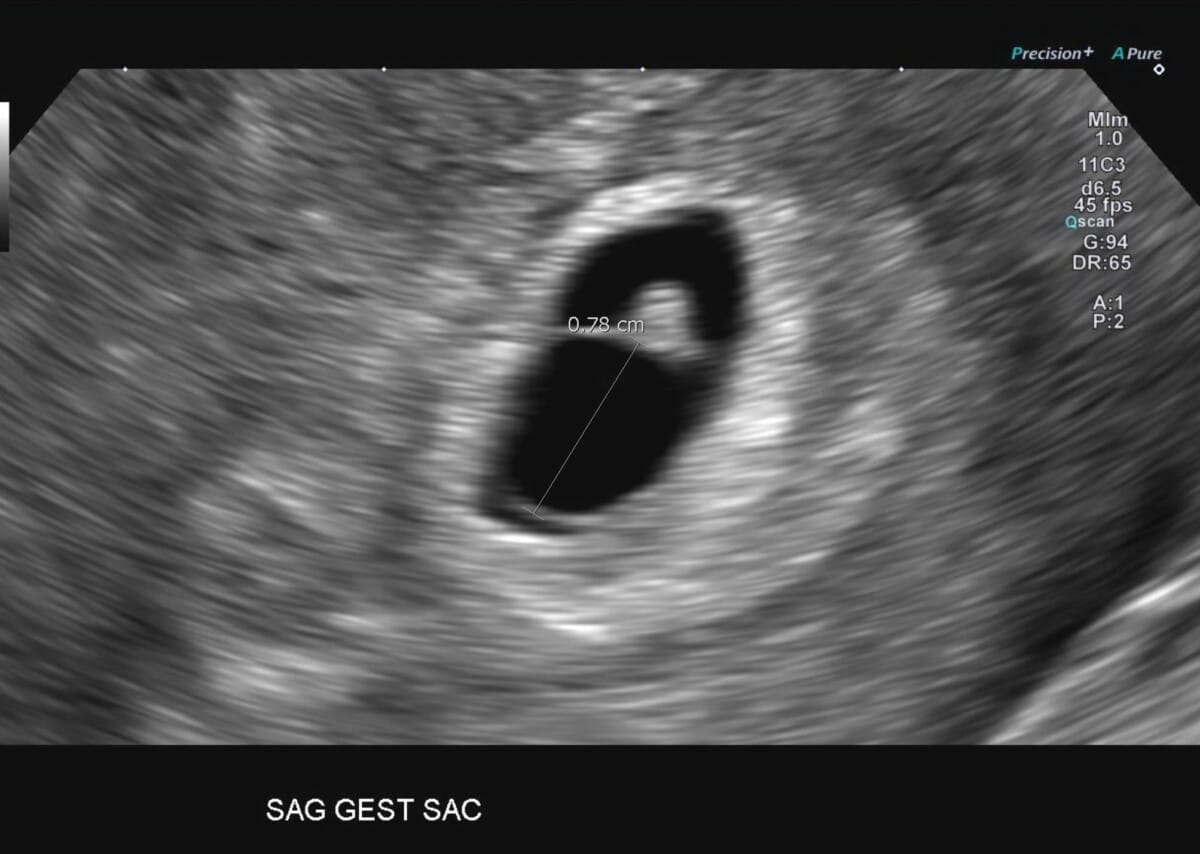
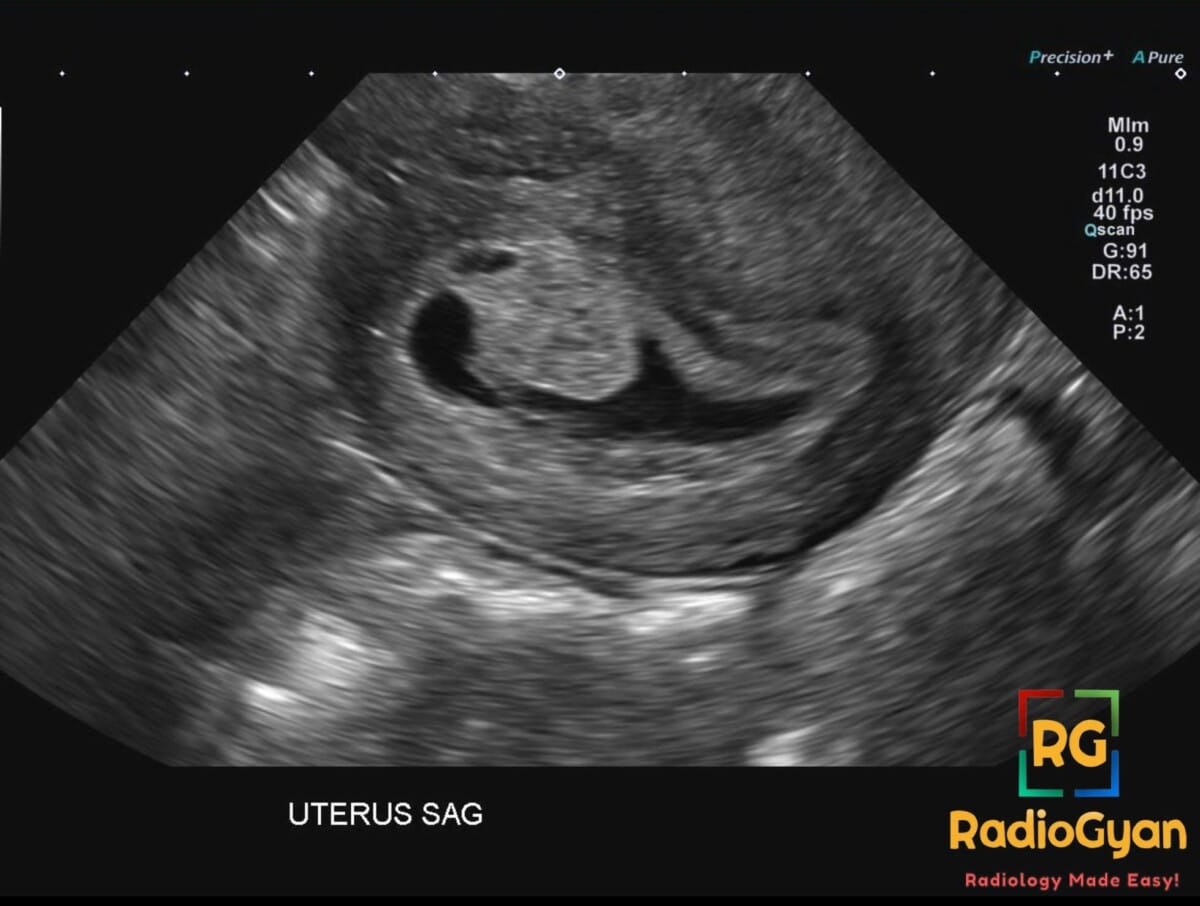
A positive pregnancy test with no intrauterine and no extrauterine pregnancy on transvaginal ultrasound is a pregnancy of unknown location (PUL). PUL is a transient state, not a diagnosis. It resolves into an intrauterine pregnancy, an early pregnancy loss, or an ectopic pregnancy [12].
The hCG Discriminatory Level Is Not a Diagnosis
ACOG is explicit that serum hCG values alone should not be used to diagnose ectopic pregnancy. If a discriminatory level is used at all, it should be set conservatively high, as high as 3,500 mIU/mL, because the older 1,500–2,000 mIU/mL cut-offs have interrupted intrauterine pregnancies that were simply scanned a little too early [12]. Accurate gestational age, not an absolute hCG number, is the better determinant of when an intrauterine sac should be visible.
| Type | Key ultrasound finding | Pitfall |
|---|---|---|
| Tubal ectopic | Extraovarian adnexal mass or tubal ring separate from the ovary; moves independently of the ovary on probe pressure | A corpus luteum is surrounded by ovarian tissue: the claw sign. Do not call it ectopic |
| Interstitial ectopic | Sac in the intramyometrial segment of the tube, myometrial mantle under 5 mm, interstitial line sign | Report as interstitial, not "cornual". High rupture and haemorrhage risk |
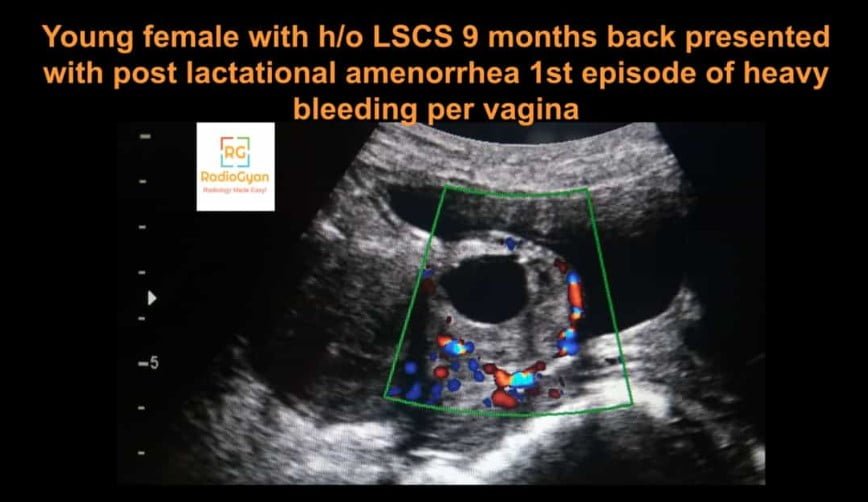
| Cesarean scar ectopic | Sac implanted in the lower uterine segment scar, thin or absent overlying myometrium, prominent peripheral vascularity | Classified as ectopic by SRU 2024. Easily mistaken for a low intrauterine sac or an EPL in progress |
| Cervical ectopic | Sac below the internal os, no sliding sign, peritrophoblastic flow | An EPL in progress passing through the cervix slides and lacks vascularity |
| Ovarian ectopic | Requires yolk sac or embryo within ovarian tissue | Over-diagnosed; most adnexal cystic lesions are corpus luteum |
| Heterotopic pregnancy | Intrauterine pregnancy plus a separate ectopic | Rare spontaneously but far commoner after ART. Finding an IUP does not end the adnexal search |
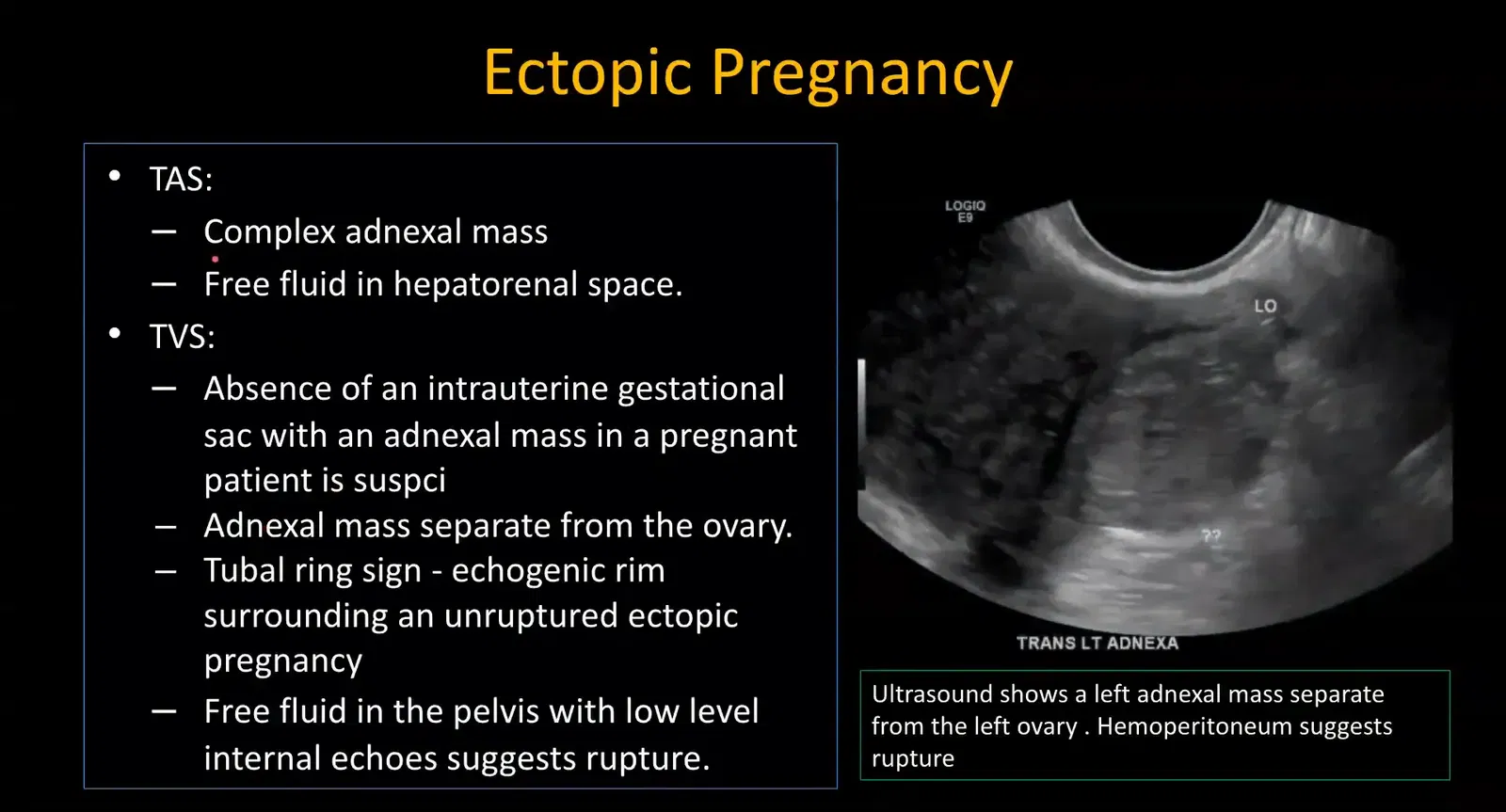
Free fluid deserves its own line in the report. Anechoic fluid in the pouch of Douglas is common and non-specific; echogenic free fluid, or fluid tracking into Morison pouch, points to haemoperitoneum from a ruptured ectopic and is a call, not a note.
After a Loss: Incomplete EPL and Enhanced Myometrial Vascularity
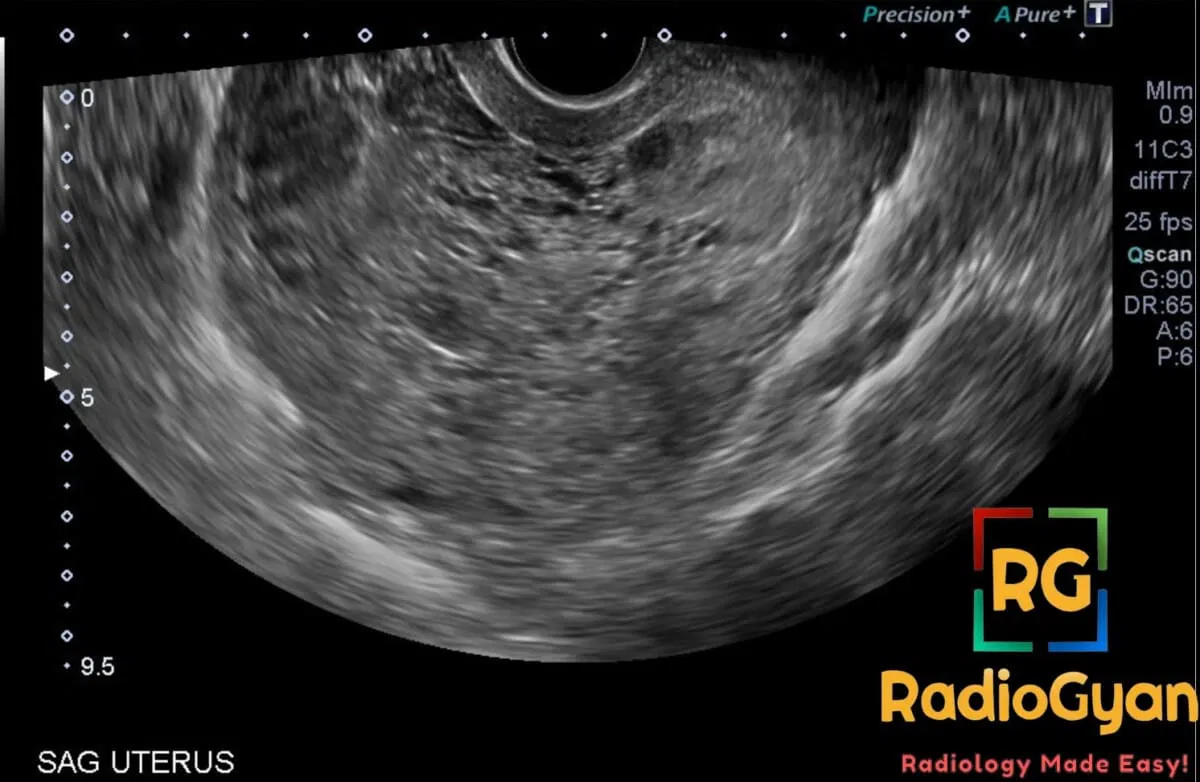
SRU 2024 prefers incomplete early pregnancy loss to "retained products of conception", though RPOC remains acceptable. The most reliable sign is an echogenic intracavitary mass distinct from the endometrium, with or without vascularity; endometrial thickness alone performs poorly [15].
- Vascular RPOC: flow enters the mass from the myometrium. Warn the clinician before curettage: bleeding risk is real.
- Enhanced myometrial vascularity (EMV): a hypervascular focus in the myometrium at the old implantation site. SRU 2024 discourages calling this an arteriovenous malformation; most cases resolve as the RPOC involutes.
- True uterine AVM: myometrial rather than endometrial epicentre, very high peak systolic velocities with low-resistance diastolic flow, and no accompanying echogenic endometrial mass.
Detailed grading and the AVM comparison are in the retained products of conception article.
Gestational Trophoblastic Disease in the First Trimester
The textbook snowstorm or cluster of grapes appearance is a late-first-trimester and second-trimester finding. Benson and colleagues showed that complete moles diagnosed at 8–12 weeks frequently look nothing like it: a heterogeneous echogenic intrauterine mass without discrete cystic spaces, often reported as an early pregnancy loss, with theca lutein cysts absent [13].
- Complete mole: no embryo, echogenic endometrial mass, cystic spaces that grow with gestational age, markedly elevated beta-hCG for dates.
- Partial mole: enlarged placenta with cystic spaces plus an abnormal or growth-restricted embryo, often with an enlarged gestational sac.
- The practical trigger: beta-hCG far higher than the ultrasound appearance predicts. In any first-trimester loss with a discordantly high hCG, request histopathology.
Multiple Pregnancy: Settle Chorionicity Now
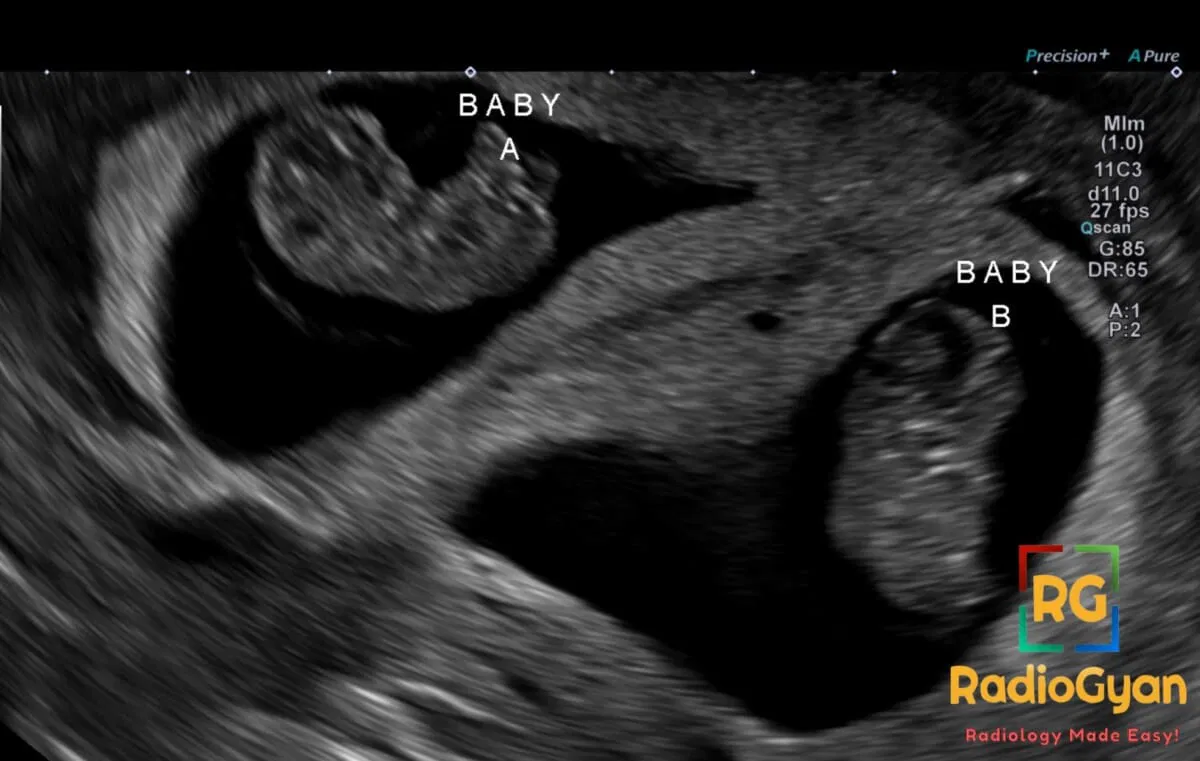
Chorionicity is easiest to determine between 11 and 14 weeks and becomes progressively harder later, so a first-trimester scan that fails to record it has cost the pregnancy its best chance of accurate risk stratification [14].
| Finding | Interpretation |
|---|---|
| Twin-peak (lambda) sign: wedge of chorion extending into the intertwin membrane | Dichorionic |
| T sign: thin membrane meeting the placenta at a right angle, no wedge | Monochorionic diamniotic |
| Two separate placentas | Dichorionic |
| Single sac, two embryos, no intervening membrane | Monochorionic monoamniotic: refer urgently |
| Number of yolk sacs (early first trimester) | Approximates amnionicity, but confirm with the membrane once visible |
First-Trimester Ultrasound Reporting Checklist
- Location: intrauterine, ectopic (state the site), or PUL. Say which.
- Number and chorionicity if more than one.
- Dating: CRL if an embryo is measurable, otherwise MSD with an explicit statement that MSD is not used for the due date.
- Cardiac activity: present or absent, with rate if slow. Use M-mode; avoid spectral Doppler over the embryo.
- Yolk sac: present or absent, and diameter if enlarged.
- Prognostic findings: subchorionic haematoma, chorionic bump, MSD minus CRL, empty amnion.
- Adnexa and free fluid: corpus luteum, any extraovarian mass, and the character of any free fluid.
- Conclusion: a plain-language line in SRU 2024 terms, and, whenever anything is uncertain, the interval to the repeat scan.
Related Calculators and Cases
- Gestational age calculator: CRL and MSD based dating.
- Early pregnancy loss criteria on ultrasound: the NEJM thresholds in detail.
- Retained products of conception: grading, Doppler and the AVM mimic.
- Due date calculator.
Frequently Asked Questions
References
- Rodgers SK, Horrow MM, Doubilet PM, et al. A lexicon for first-trimester US: Society of Radiologists in Ultrasound consensus conference recommendations. Radiology. 2024;312(2):e240122. PMID 39189906
- Doubilet PM, Benson CB, Bourne T, Blaivas M. Diagnostic criteria for nonviable pregnancy early in the first trimester. N Engl J Med. 2013;369(15):1443-51. PMID 24106937
- Preisler J, Kopeika J, Ismail L, et al. Defining safe criteria to diagnose miscarriage: prospective observational multicentre study. BMJ. 2015;351:h4579. PMID 26400869
- Pexsters A, Luts J, Van Schoubroeck D, et al. Clinical implications of intra- and interobserver reproducibility of transvaginal sonographic measurement of gestational sac and crown-rump length at 6-9 weeks gestation. Ultrasound Obstet Gynecol. 2011;38(5):510-5. PMID 21077156
- American College of Obstetricians and Gynecologists. Committee opinion no. 700: methods for estimating the due date. Obstet Gynecol. 2017;129(5):e150-e154. PMID 28426621
- Rodgers SK, Chang C, DeBardeleben JT, Horrow MM. Normal and abnormal US findings in early first-trimester pregnancy: review of the Society of Radiologists in Ultrasound 2012 consensus panel recommendations. Radiographics. 2015;35(7):2135-48. PMID 26562242
- Doubilet PM, Phillips CH, Durfee SM, Benson CB. Fourfold improved odds of a good first trimester outcome once a yolk sac is seen in early pregnancy. J Ultrasound Med. 2022;41(11):2835-40. PMID 35225369
- Doubilet PM, Benson CB. Outcome of first-trimester pregnancies with slow embryonic heart rate at 6-7 weeks gestation and normal heart rate by 8 weeks at US. Radiology. 2005;236(2):643-6. PMID 15994999
- Arleo EK, Troiano RN. Outcome of early first-trimester pregnancies (less than 6.1 weeks) with slow embryonic heart rate. AJR Am J Roentgenol. 2011;197(1):252-5. PMID 21701037
- Tuuli MG, Norman SM, Odibo AO, Macones GA, Cahill AG. Perinatal outcomes in women with subchorionic hematoma: a systematic review and meta-analysis. Obstet Gynecol. 2011;117(5):1205-12. PMID 21508763
- Arleo EK, Dunning A, Troiano RN. Chorionic bump in pregnant patients and associated live birth rate: a systematic review and meta-analysis. J Ultrasound Med. 2015;34(4):553-7. PMID 25792569
- American College of Obstetricians and Gynecologists. ACOG practice bulletin no. 193: tubal ectopic pregnancy. Obstet Gynecol. 2018;131(3):e91-e103. PMID 29470343
- Benson CB, Genest DR, Bernstein MR, Soto-Wright V, Goldstein DP, Berkowitz RS. Sonographic appearance of first trimester complete hydatidiform moles. Ultrasound Obstet Gynecol. 2000;16(2):188-91. PMID 11117091
- Packard AT, Clingan MJ, Strachowski LM, et al. Pearls and pitfalls of first-trimester US screening and prenatal testing: a pictorial review. Radiographics. 2025;45(6):e240184. PMID 40372936
- Incognito GG, Ettore C, De Tommasi O, et al. Ultrasound assessment of retained products of conception (RPOC): insights from the current literature. J Clin Med. 2025;14(16). PMID 40869690




Improve Content And Help Your Colleagues!
Found an error in the post? Please let us know using our contact page and we will update it with due credits!
If you wish to contribute radiological images for this case (or any other article on the website), you can submit them here and you will be duly credited: Submit radiology case