


What causes lead-pipe colon in the large bowel on barium enema?
Let me know in the comments.
Click to reveal the answer
Answer:
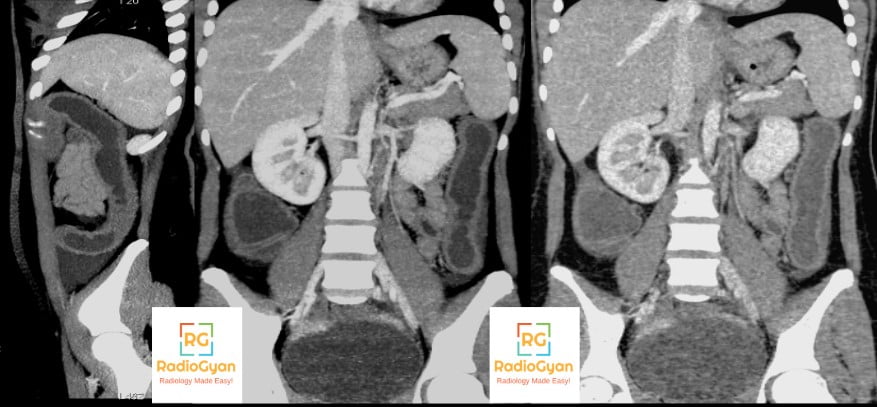
Chronic ulcerative colitis results in the lead-pipe colon sign, characterized by a featureless, smooth, tubular, and often shortened colon with complete loss of haustral markings on barium enema, CT, MRI, or plain radiography. It reflects long-standing, permanent structural damage to the colonic wall rather than active inflammation.
Why is it called so?
The sign is named for the rigid, smooth, cylindrical appearance of the colon resembling the uniform, featureless exterior of a lead pipe.
Pathophysiology
Repeated cycles of inflammation in chronic ulcerative colitis lead to mucosal ulceration, fibrosis, and muscularis mucosae hypertrophy, which obliterate haustra and cause uniform bowel wall thinning with luminal narrowing and loss of distensibility, producing a rigid, non-distensible tubular contour.
Alternative names: Ahaustral colon, lead-pipe sign
Other associated named signs: Thumbprinting (mucosal/submucosal edema in acute colitis), collar-button ulcers (undermined ulcers in ulcerative colitis)
References
Access all radiology signs posted so far: https://radiogyan.com/radiology-signs/

Improve Content And Help Your Colleagues!
Found an error in the post? Please let us know using our contact page and we will update it with due credits!
If you wish to contribute radiological images for this case (or any other article on the website), you can submit them here and you will be duly credited: Submit radiology case