


What causes sunburst periosteal reaction in bone on radiographic imaging?
Let me know in the comments.
Click to reveal the answer
Sunburst periosteal reaction is caused by an aggressive periosteal response to rapidly growing bone lesions, including malignant primary bone tumors such as osteosarcoma, metastatic bone disease, or aggressive infections. It is also seen in other aggressive bone conditions like Ewing sarcoma, haemangioma, plasmacytoma, and tuberculosis. This reaction indicates rapid new bone formation in response to cortical destruction or irritation.
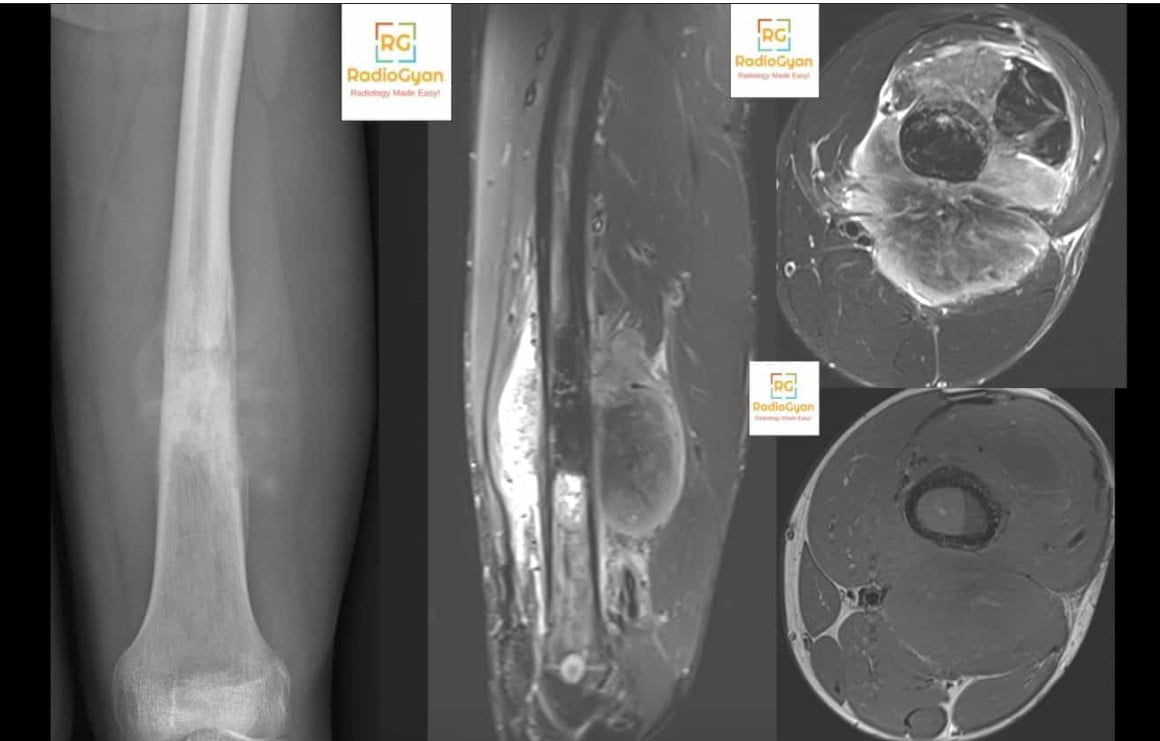
Why is it called so?
The term sunburst refers to the radiographic appearance where new bone spicules radiate outward in a divergent, ray-like pattern from the cortex, resembling rays of the sun emanating from a center point. This X-ray pattern is a key imaging modality indicator of aggressive periosteal bone formation.
Pathophysiology
The sunburst periosteal reaction pattern occurs when the periosteum attempts rapid formation of new woven bone in response to a rapidly expanding lesion. Because the process is aggressive and rapid, the periosteum cannot lay down a continuous or organized lamellar bone layer. Instead, multiple spicules of bone form perpendicularly and diverge outward in a disorganized fashion, producing radiating linear opacities on radiographic imaging. This represents aggressive periosteal bone formation induced by an underlying rapidly growing tumor or infection.
Alternative names: Sunray periosteal reaction
Other associated named signs: Codman triangle (another form of aggressive periosteal reaction)

Improve Content And Help Your Colleagues!
Found an error in the post? Please let us know using our contact page and we will update it with due credits!
If you wish to contribute radiological images for this case (or any other article on the website), you can submit them here and you will be duly credited: Submit radiology case