


What causes the misty mesentery sign (increased attenuation in the mesenteric fat) on CT imaging?
Let me know in the comments.
Click to reveal the answer
Answer:
The misty mesentery sign reflects a pathological increase in mesenteric fat attenuation on CT imaging caused by fluid infiltration (edema), hemorrhage, inflammation, neoplastic cells, or fibrosis within the mesentery. It is a nonspecific radiological finding associated with various underlying pathologies:
- Mesenteric panniculitis (chronic inflammatory and fibrotic disorder of the mesenteric fat)
- Infections (e.g., tuberculosis)
- Neoplasms (e.g., lymphoma)
- Trauma
- Vascular disorders
- Systemic diseases (e.g., cirrhosis, hypoalbuminemia)
Why is it called so?
The term “misty” describes the hazy or foggy appearance of the mesenteric fat on CT scans, which normally shows low attenuation due to its fatty content. Pathologic processes increase fat density, producing a “mist-like” appearance on the mesenteric CT images.
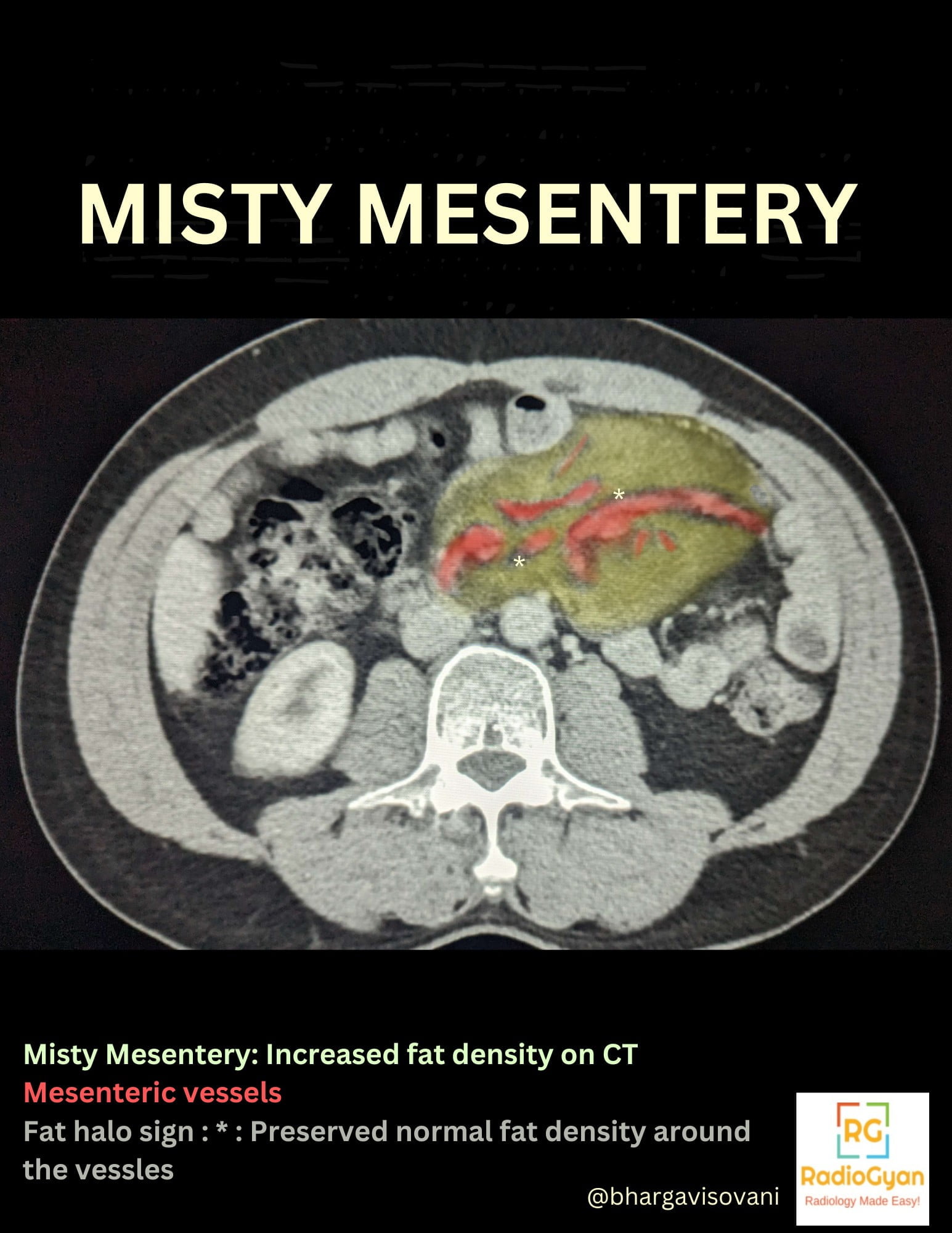
Pathophysiology
The sign develops when abnormal accumulation of fluid, cellular infiltrates (inflammatory or neoplastic cells), hemorrhage, or fibrotic tissue replaces or infiltrates the normal low-attenuation mesenteric fat. This raises attenuation values from typically less than -100 Hounsfield units (HU) to higher levels, creating a muddled, hazy appearance. Additional findings such as adjacent lymphadenopathy and soft-tissue strands often accompany this feature depending on the underlying condition.
Alternative names: None
Other associated named signs:
- Fat halo sign – a spared fat halo around mesenteric vessels seen in mesenteric panniculitis
- Tumoral pseudocapsule sign – a peripheral curvilinear soft-tissue band occasionally seen in mesenteric panniculitis
Detailed article: https://radiogyan.com/cases/misty-mesentery-sclerosing-mesenteritis/

Improve Content And Help Your Colleagues!
Found an error in the post? Please let us know using our contact page and we will update it with due credits!
If you wish to contribute radiological images for this case (or any other article on the website), you can submit them here and you will be duly credited: Submit radiology case