


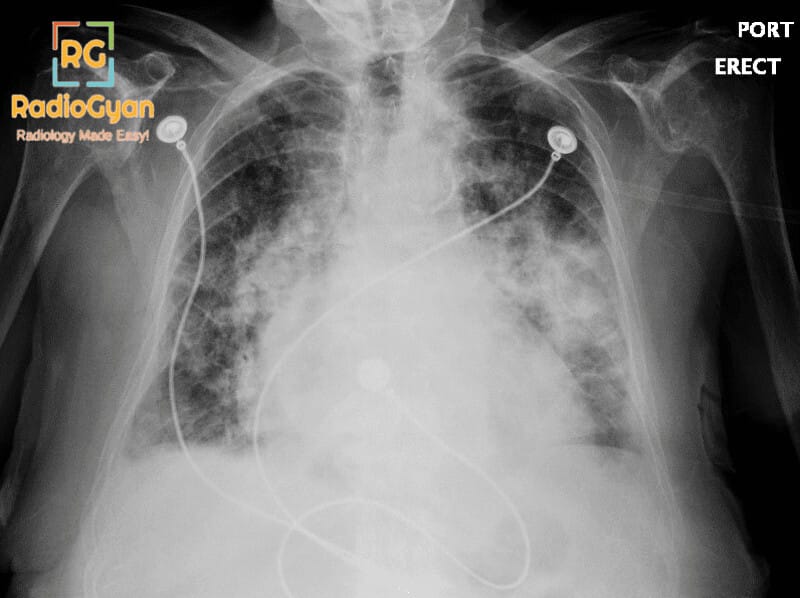
What causes Bat-wing appearance on chest xray?
Let me know in the comments.
Click to reveal the answer
Answer:
The bat-wing appearance represents bilateral symmetrical perihilar opacities that typically indicate accumulation of fluid or cellular material in the alveoli and interstitium of the lungs. The most common cause is pulmonary edema from cardiac sources such as heart failure, characterized by fluid accumulation due to elevated pulmonary venous pressure and increased hydrostatic pressure in the pulmonary capillaries. However, this sign is not exclusive to cardiac causes and can also be seen in pneumonia, pulmonary hemorrhage, inhalation injuries, sarcoidosis, bronchoalveolar carcinoma, and pulmonary alveolar proteinosis. The appearance typically demonstrates a ground-glass pattern and characteristically spares the lung cortices, preserving the peripheral lung zones while concentrating in the central perihilar regions. The sign is symmetrical and may be associated with cardiomegaly when the underlying cause is cardiac in nature. Air bronchograms may be visible, representing patent airways surrounded by consolidated or edematous lung tissue.
Why is it called so?
The sign is named “bat-wing appearance” because the bilateral symmetrical perihilar opacities that radiate outward from the hilum resemble the wings of a bat in extension, creating a characteristic butterfly or wing-like silhouette on frontal radiographic views. The symmetrical distribution and shape mimicking a bat’s outstretched wings provide an intuitive visual descriptor for this radiological pattern.
Pathophysiology
The bat-wing appearance develops through the accumulation of fluid in the pulmonary alveoli and interstitial spaces. In cardiac pulmonary edema, elevated left atrial pressure (from left ventricular dysfunction, mitral valve disease, or fluid overload) increases hydrostatic pressure in the pulmonary capillaries, forcing fluid across the capillary membrane into the interstitium and alveolar spaces. This fluid-filled tissue appears opaque on radiographs. The perihilar concentration occurs because pulmonary venous pressure is highest centrally at the hilum and decreases peripherally. As edema progresses, it advances from the perihilar regions toward the periphery. The bilateral symmetry reflects the uniform distribution of pulmonary venous pressure elevation across both lungs. In non-cardiac causes such as pneumonia or alveolar proteinosis, similar central consolidation patterns develop through different mechanisms—either inflammatory cellular infiltration or protein deposition—but produce the same radiographic appearance.
Alternative names:
Butterfly appearance, butterfly pattern, batwing sign, perihilar shadowing
Other associated named signs:
Kerley B lines (horizontal septal lines indicating pulmonary edema), upper zone vessel enlargement (reflecting pulmonary venous hypertension), Cardiomegaly (enlarged cardiac silhouette in heart failure), Reverse bat-wing or reversed bat-wing appearance (peripheral or subpleural consolidation representing the opposite distribution pattern)
Access all radiology signs posted so far: https://radiogyan.com/radiology-signs/

Improve Content And Help Your Colleagues!
Found an error in the post? Please let us know using our contact page and we will update it with due credits!
If you wish to contribute radiological images for this case (or any other article on the website), you can submit them here and you will be duly credited: Submit radiology case