


What causes the Air Crescent Sign in the lung on chest radiograph or CT?
Let me know in the comments.
Click to reveal the answer
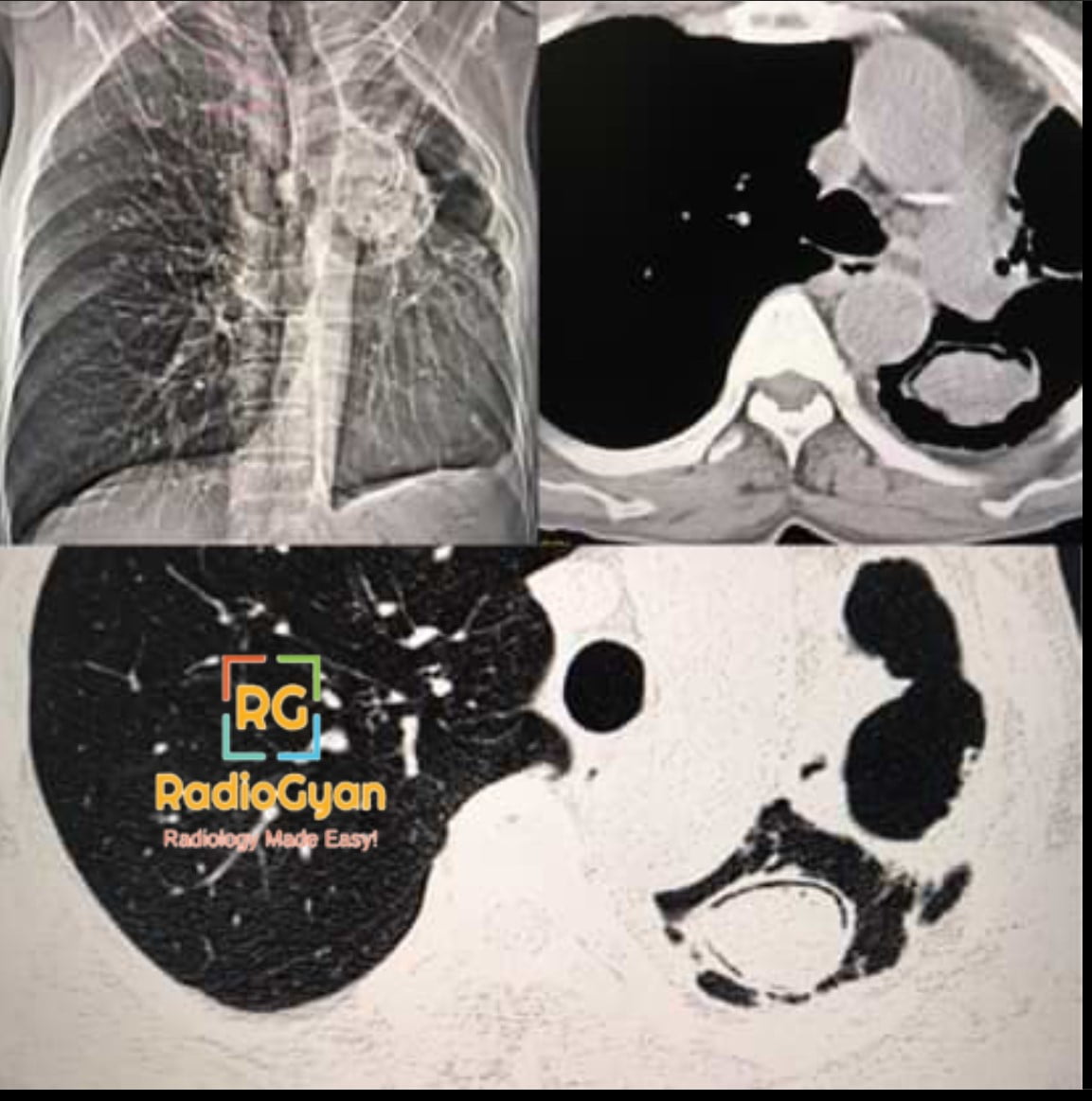
The air crescent sign results from the formation of a crescent-shaped collection of air between a central intracavitary mass or necrotic tissue and the surrounding lung cavity wall. It is most commonly seen in fungal infections such as aspergilloma (a fungal ball caused by Aspergillus species) growing within pre-existing lung cavities. It can also occur due to necrotic pulmonary lesions where necrotic lung tissue detaches from the cavity wall, such as in recovering invasive pulmonary aspergillosis. The sign signifies partial separation of the mass or necrotic material from the cavity, often associated with underlying cavitary pulmonary diseases including tuberculosis, sarcoidosis, or neoplasms.
Why is it called so?
The term “Air Crescent Sign” derives from the Latin words “aer” meaning air, and “crescere” meaning to grow, describing the crescent-shaped radiolucent (air) area seen on imaging studies surrounding a central mass within a lung cavity.
Pathophysiology
The sign develops when air collects between the cavity wall and an adjacent mass or necrotic tissue that has begun to separate or retract. This separation occurs as the central lesion loses adherence from the cavity wall due to necrosis or fungal colonization, allowing air to fill the space and produce a characteristic crescentic radiolucency on imaging. The crescent shape reflects partial circumferential separation rather than complete detachment of the intracavitary lesion.

Improve Content And Help Your Colleagues!
Found an error in the post? Please let us know using our contact page and we will update it with due credits!
If you wish to contribute radiological images for this case (or any other article on the website), you can submit them here and you will be duly credited: Submit radiology case