


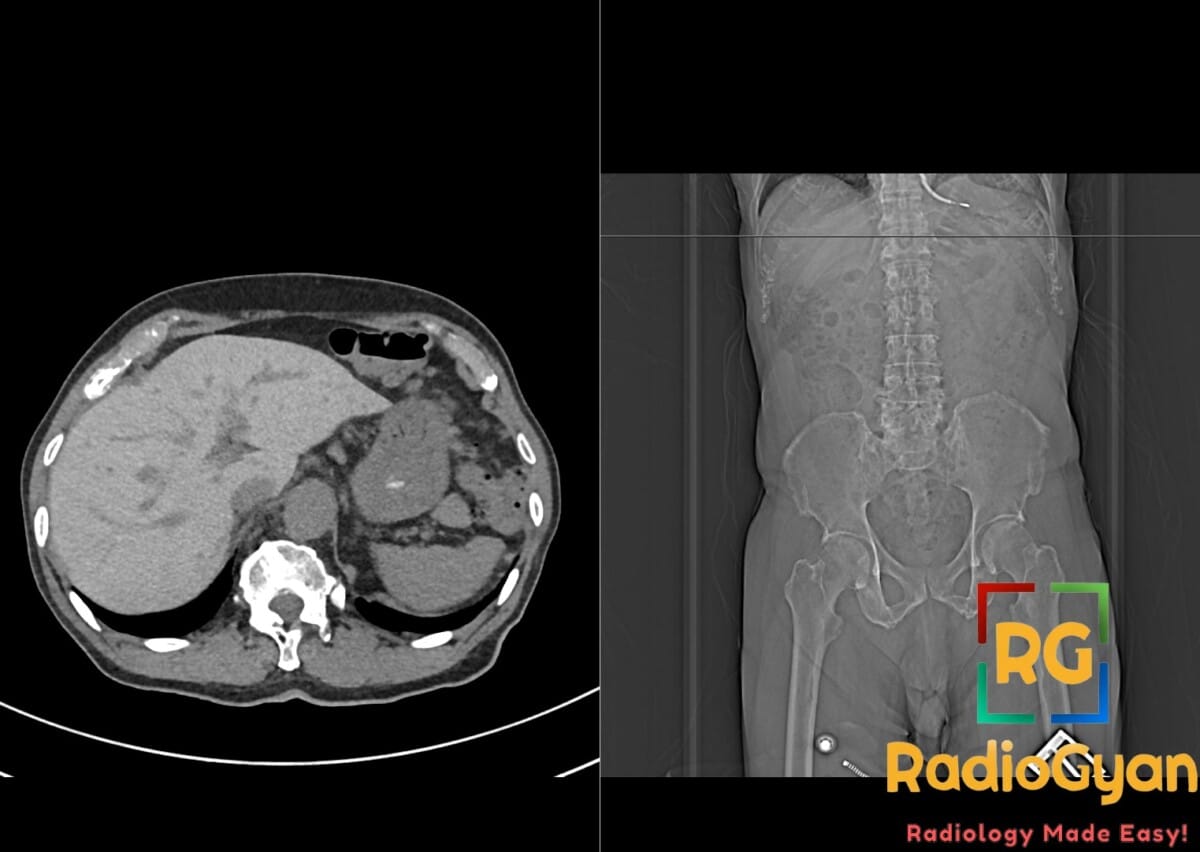
- Clinical: Typically adults on long-term amiodarone therapy for arrhythmias; may have elevated liver enzymes; often asymptomatic but can have hepatotoxicity risk factors like duration and dosage of amiodarone
- Etiology/Pathophys: Iodine-rich amiodarone and its metabolite desethylamiodarone accumulate in hepatocytes causing increased liver iodine content; leads to increased CT attenuation and possible toxic injury (e.g., steatohepatitis)
- Radiograph: Not applicable for hyperdense liver detection; main modality is CT
- CT: Markedly increased liver parenchymal attenuation (hyperdense liver), often >90-150 HU on non-contrast scans; liver density significantly exceeds spleen density (normal liver/spleen ratio ~1-1.3); hyperattenuation due to iodine content, seen without IV contrast
- DDx: Primary hemochromatosis (iron overload with MRI paramagnetic effects), Wilson disease (copper), glycogen storage disease type IV, gold deposition; differentiation by clinical context, lab tests, and absence of iron deposition imaging features
- Tx: Discontinuation or dose reduction of amiodarone if hepatotoxicity present; monitoring liver enzymes and imaging; no treatment if only asymptomatic iodine deposition without toxicity

Improve Content And Help Your Colleagues!
Found an error in the post? Please let us know using our contact page and we will update it with due credits!
If you wish to contribute radiological images for this case (or any other article on the website), you can submit them here and you will be duly credited: Submit radiology case