


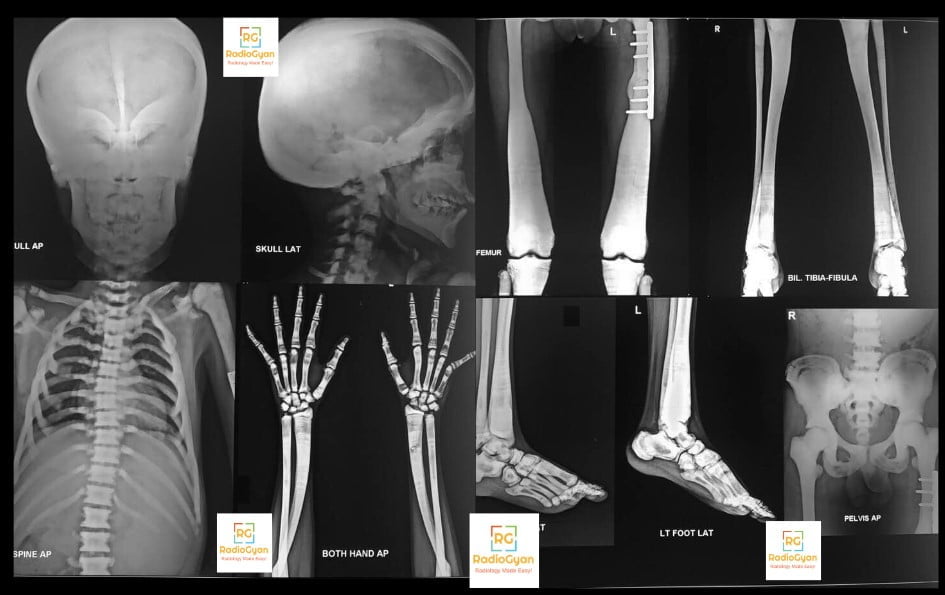
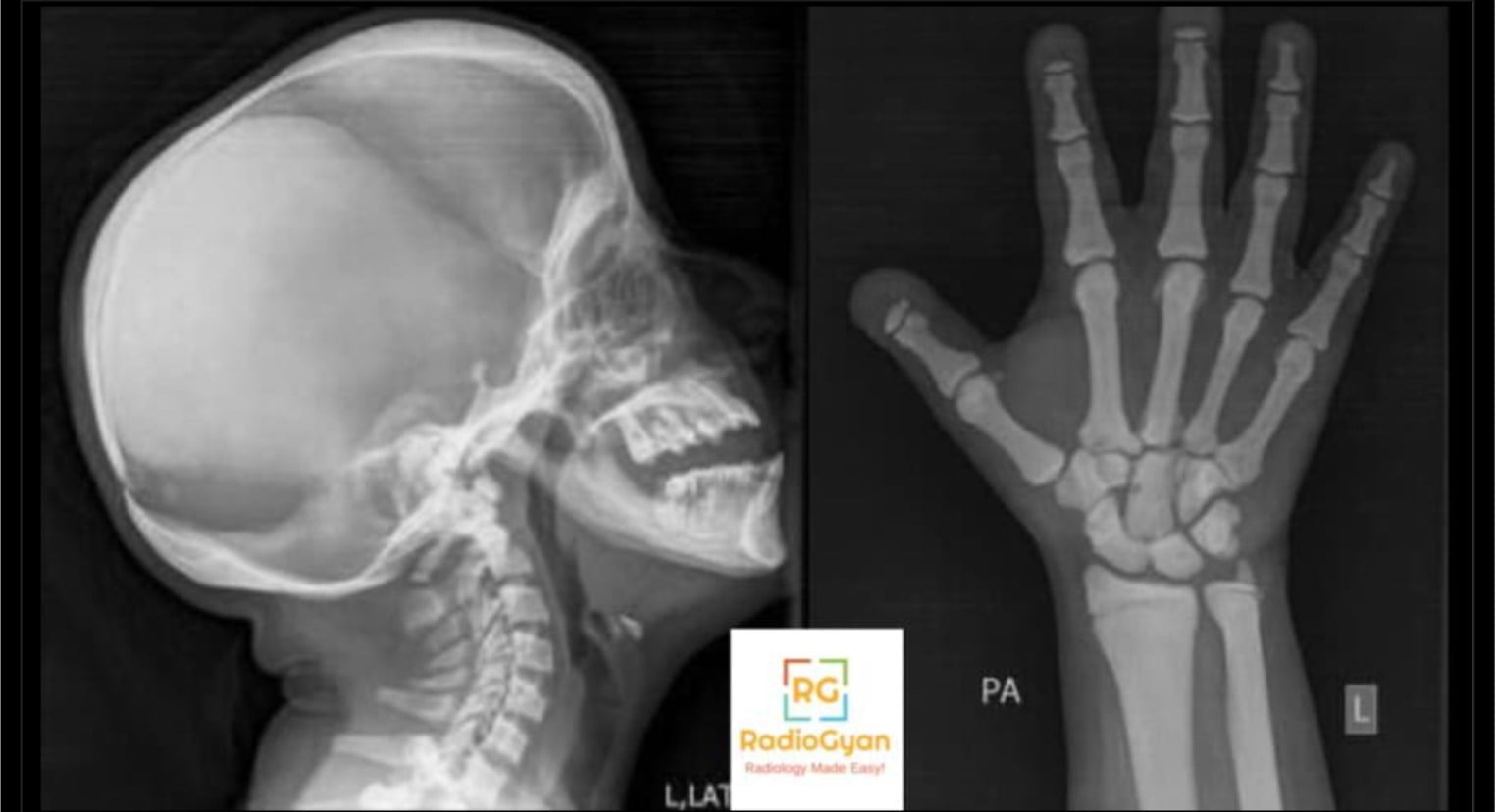
Pycnodysostosis and osteopetrosis can both appear as osteosclerotic skeletal dysplasias on imaging, but pycnodysostosis is more strongly suggested by the combination of persistent open or delayed cranial sutures, hypoplastic or aplastic terminal phalanges with an acro-osteolysis-like appearance, and sometimes clavicular hypoplasia. By contrast, osteopetrosis more typically shows medullary cavity obliteration, bone-within-bone and Erlenmeyer flask changes, and in classic severe forms may be accompanied by marrow failure findings such as anemia and hepatosplenomegaly.
The most useful imaging differences are:
| Feature | Pycnodysostosis | Osteopetrosis |
|---|---|---|
| Bone density | Generalized osteosclerosis is present. | Generalized osteosclerosis is also present. |
| Medullary cavities | Not obliterated in the classic way seen in osteopetrosis; may be relatively preserved or narrowed depending on the case and reference. | Obliterated or markedly narrowed due to loss of medullary space. |
| Skull sutures / fontanelles | Delayed closure, persistent open sutures, often with Wormian bones. | Typically not defined by delayed cranial suture closure in the usual imaging differential. |
| Hands / terminal phalanges | Hypoplastic or aplastic terminal phalanges, often with an acro-osteolysis-like appearance and short stubby fingers. | No terminal phalangeal hypoplasia as a classic distinguishing feature. |
| Clavicles | Can be hypoplastic. | No clavicular hypoplasia as a classic distinguishing feature. |
| Craniofacial findings | Frontal and occipital bossing, midface hypoplasia, beaked nose, and an obtuse mandibular angle may be seen. | Skull-base sclerosis may lead to cranial nerve compression. |
| Systemic clues | Usually lacks the marrow failure pattern of classic osteopetrosis. | Anemia, leukopenia, and hepatosplenomegaly are important clues in severe classic forms. |
A practical radiology approach is:
- Think pycnodysostosis when you see dense bones plus open cranial sutures and abnormal terminal phalanges, especially with a small mandible and possible clavicular hypoplasia.
- Think osteopetrosis when the dominant pattern is diffuse sclerosis with medullary canal obliteration, bone-within-bone appearance, and clinical or imaging evidence of marrow failure.
Key differentiating points emphasized in the literature are that osteopetrosis characteristically involves the medullary canal, whereas pycnodysostosis is better recognized by the combined pattern of skull suture delay, mandibular changes, and terminal phalangeal abnormalities. Anemia and hepatosplenomegaly support osteopetrosis, particularly in its severe classic forms, rather than pycnodysostosis.

Improve Content And Help Your Colleagues!
Found an error in the post? Please let us know using our contact page and we will update it with due credits!
If you wish to contribute radiological images for this case (or any other article on the website), you can submit them here and you will be duly credited: Submit radiology case