


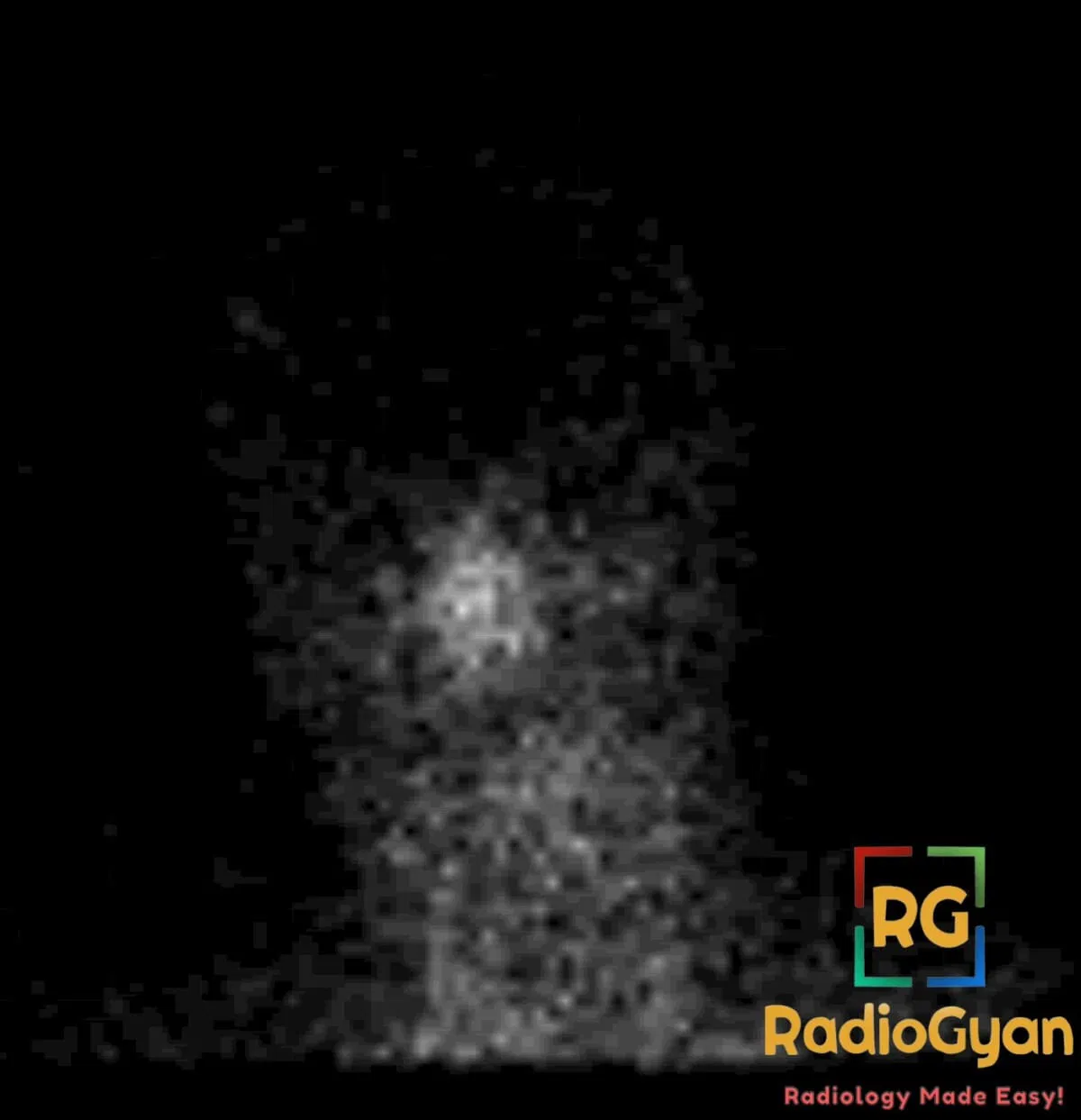
What causes the Hot Nose sign in cerebral perfusion nuclear medicine studies?
Let me know in the comments.
Click to reveal the answer
Answer:
The Hot Nose sign occurs due to brain death, characterized by absent or severely reduced intracerebral blood flow from occlusion or cessation of flow in the internal carotid arteries. This results in relative increase of blood flow through the external carotid arteries, which supply the nasal region. The increased perfusion in the nasal area appears as a “hot” or intensely radiotracer-avid region on nuclear medicine cerebral perfusion imaging performed with agents like Technetium-99m-exametazime.
Why is it called so?
It is named the “Hot Nose sign” because the nasal region appears prominently hyperperfused (“hot”) on nuclear medicine scans during brain death evaluation, resembling a bright signal or “hot” spot over the nose on the images.
Pathophysiology
In brain death, cerebral perfusion ceases due to cessation of flow through the internal carotid arteries. Collateral flow is redirected predominantly through the external carotid artery branches. Since the external carotid artery supplies the face and nose, relatively increased blood flow to these regions leads to increased tracer uptake in the nasal area on perfusion scintigraphy, producing the Hot Nose sign appearance.
Alternative names: None
Other associated named signs: Absence of intracranial perfusion (indicative of brain death)
Access all radiology signs posted so far: https://radiogyan.com/radiology-signs/

Improve Content And Help Your Colleagues!
Found an error in the post? Please let us know using our contact page and we will update it with due credits!
If you wish to contribute radiological images for this case (or any other article on the website), you can submit them here and you will be duly credited: Submit radiology case