


What causes fat pad sign in the elbow on radiography?
Let me know in the comments.
Click to reveal the answer
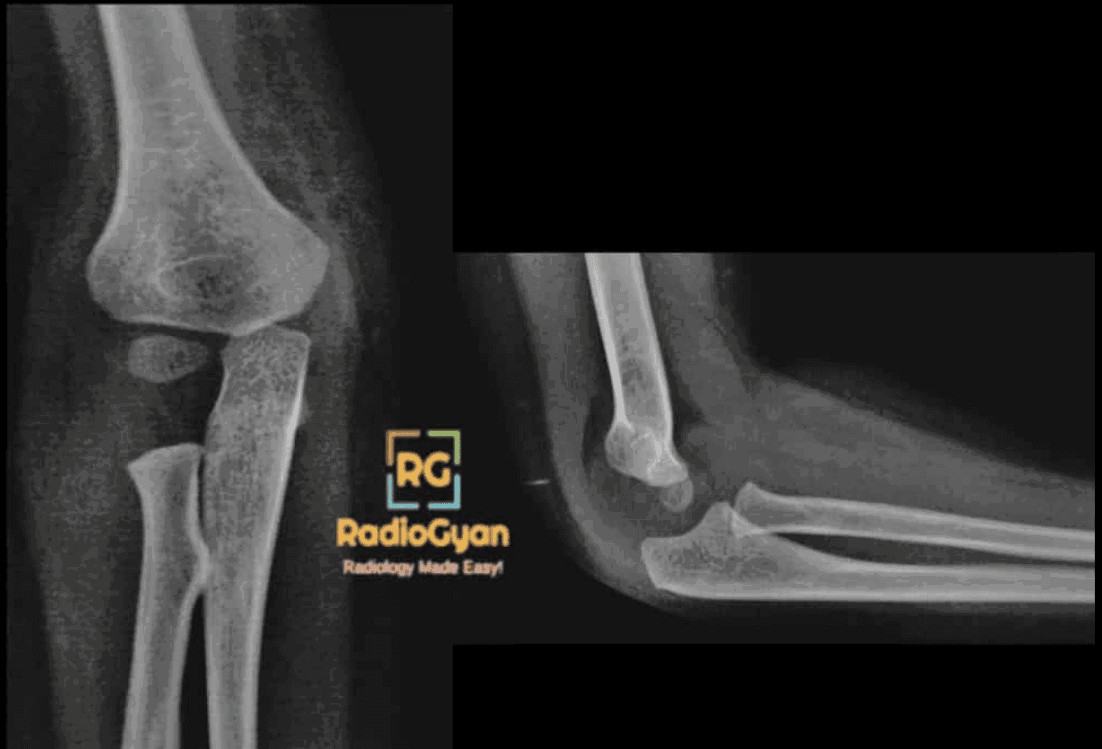
The fat pad sign is caused by intra-articular elbow joint effusion, often due to trauma resulting in an occult fracture of one or more bones around the elbow (e.g., radial head fracture in adults, supracondylar or condylar fractures in children).
Other causes of elbow joint effusion that may produce a fat pad sign include inflammatory or infectious conditions such as septic arthritis, toxic synovitis, juvenile rheumatoid arthritis, or osteomyelitis affecting the distal humerus.
A positive posterior fat pad sign on a lateral elbow radiograph is considered abnormal and indicative of intra-articular pathology, while the anterior fat pad may be normal or show a “sail sign” if elevated.
Why is it called so?
The sign is named for the displacement of the normally inconspicuous fat pads around the elbow joint visible on lateral radiographs. The anterior fat pad, when elevated, resembles a triangular sail (sail sign). The posterior fat pad, usually hidden within the olecranon fossa, becomes visible when displaced by joint effusion, thus the name “fat pad sign” reflects the visibility and displacement of these fat planes.
Pathophysiology
Normally, the anterior and posterior fat pads lie within the anterior and posterior fossae of the distal humerus and are not prominent on lateral X-rays with the elbow flexed at 90 degrees. When there is an increase in intra-articular fluid, such as from bleeding or inflammatory exudate secondary to trauma or pathology, the joint capsule distends. This distension displaces adjacent fat pads outward, causing the previously hidden posterior fat pad to become visible and the anterior fat pad to be elevated away from the bone, producing the characteristic radiographic appearances.
Alternative names: Sail sign (specifically for the anterior fat pad sign)
Other associated named signs: None specifically named beyond the anterior (sail sign) and posterior fat pad signs

Improve Content And Help Your Colleagues!
Found an error in the post? Please let us know using our contact page and we will update it with due credits!
If you wish to contribute radiological images for this case (or any other article on the website), you can submit them here and you will be duly credited: Submit radiology case