


What causes Erlenmeyer flask deformity in long bones on radiographs?
Let me know in the comments.
Click to reveal the answer
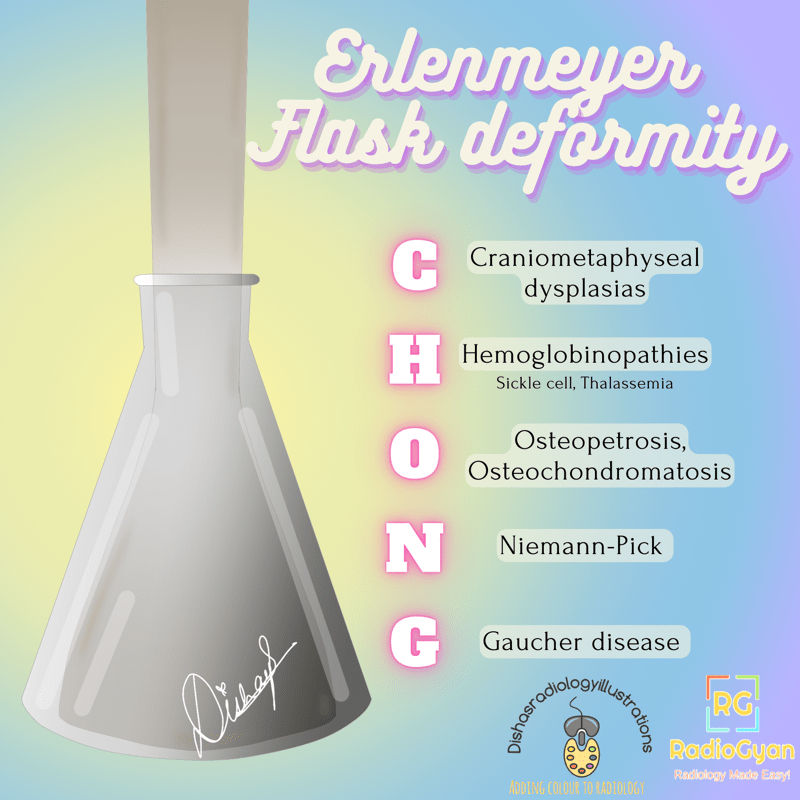
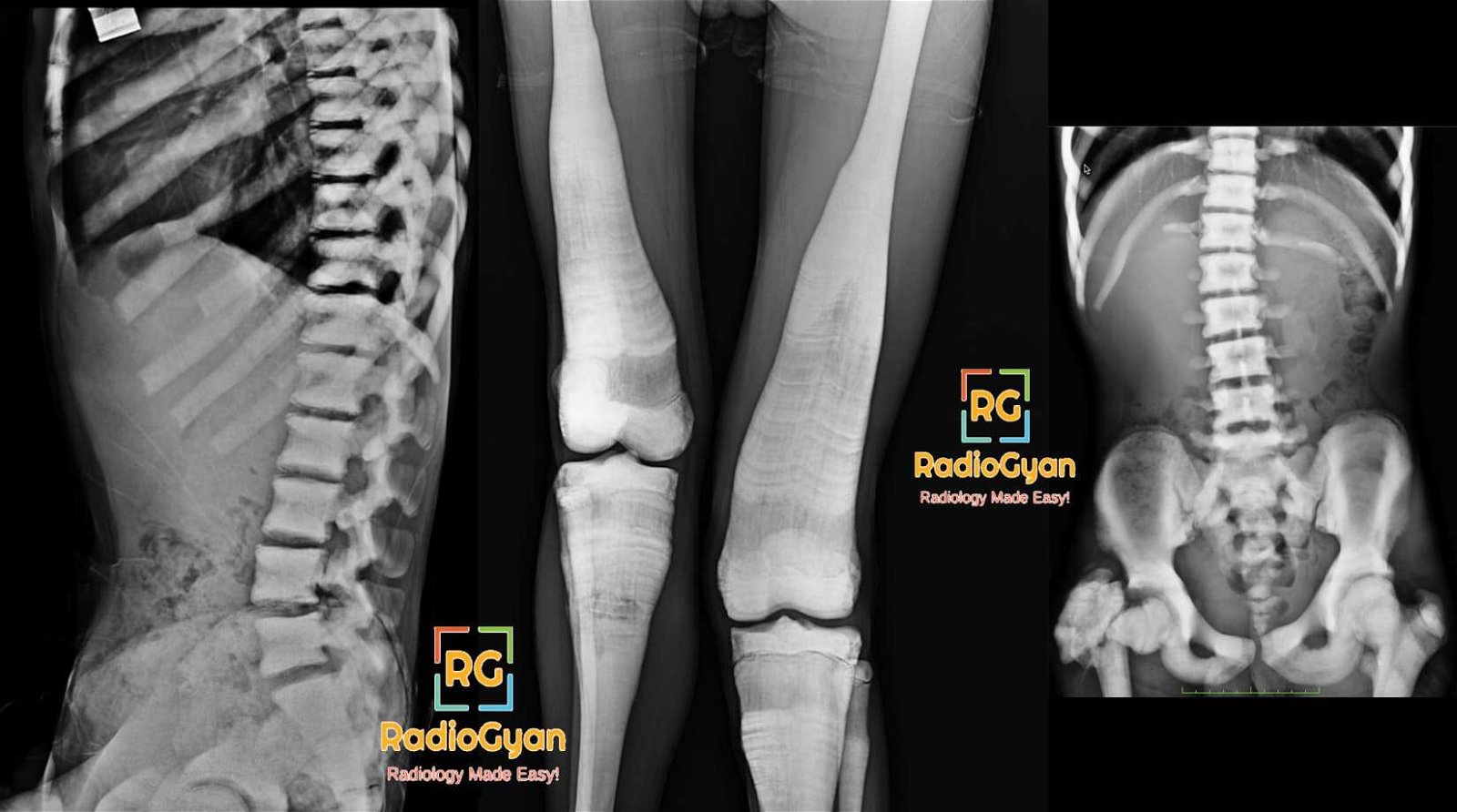
Erlenmeyer flask deformity results from defective metaphyseal modeling, specifically undertubulation of long bones, causing flaring and lack of normal diaphyseal constriction. This abnormality is seen most commonly in the distal femora but may also involve proximal humeri, tibiae, distal ulnae, and radii. It is associated with several clinical conditions including osteopetrosis, Gaucher disease, thalassemia, sickle cell disease, craniometaphyseal dysplasia, fibrous dysplasia, Niemann-Pick disease, hereditary multiple exostoses, lead poisoning, and various skeletal dysplasias.
Why is it called so?
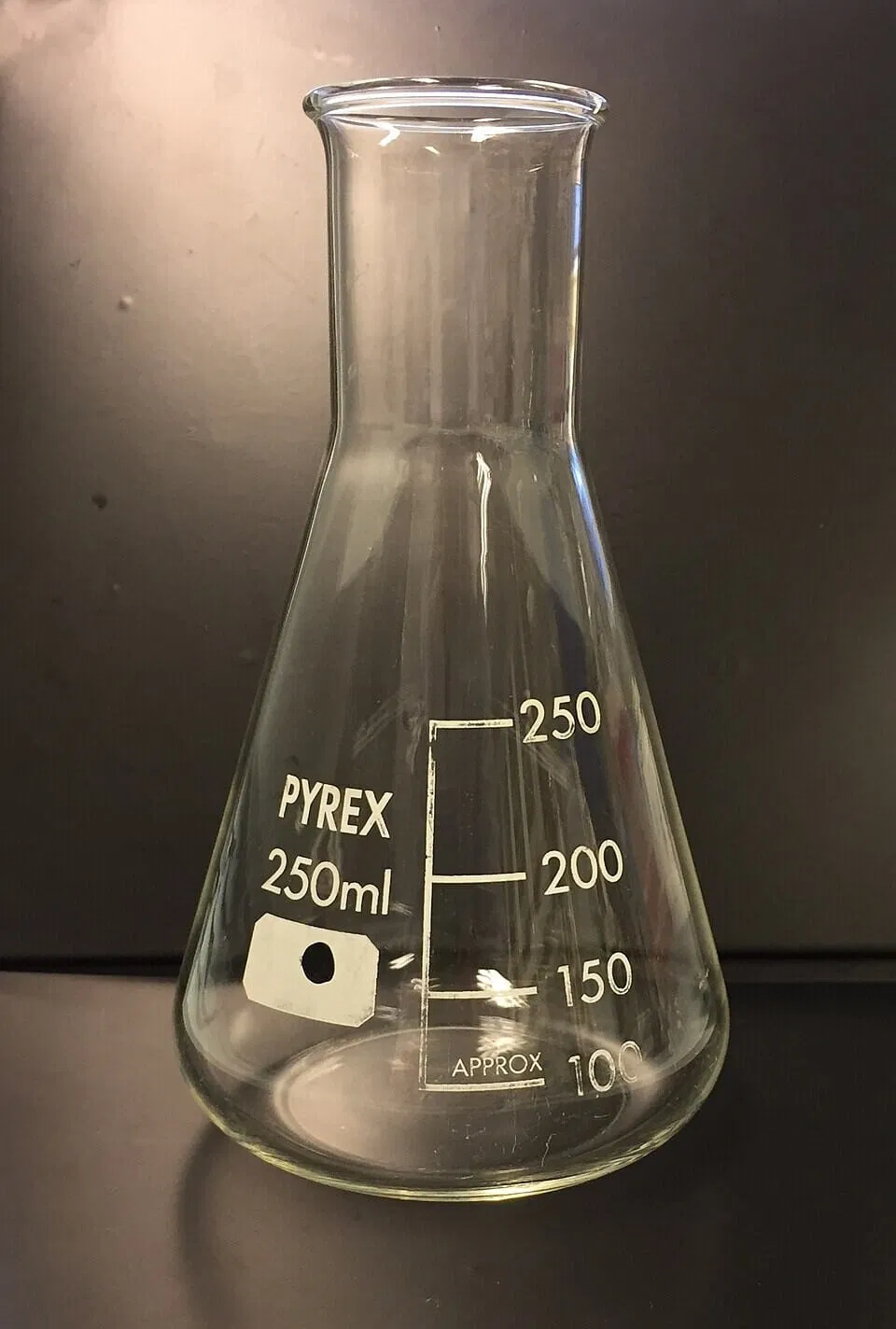
The deformity is named for its resemblance to the Erlenmeyer flask, a conical laboratory flask with a wide, flared base and narrow neck, designed by the German chemist Emil Erlenmeyer. The radiographic appearance shows a broad metaphyseal region flaring outward from a relatively narrow diaphysis, mimicking the flask’s shape.
Pathophysiology
The sign develops due to impaired or defective bone modeling at the meta-diaphyseal junction during bone growth, leading to failure of normal tubular constriction (undertubulation). Instead of a tapered diaphysis with a defined metaphyseal flare, the metaphysis remains broadened and flared with straight or convex lateral borders and thinning of the cortical bone. This results from altered osteoclastic resorption or abnormal remodeling depending on the underlying disease process.
Alternative names: Metaphyseal flaring
Other associated named signs: None specific to this sign
Access all radiology signs posted so far: https://radiogyan.com/radiology-signs/

Improve Content And Help Your Colleagues!
Found an error in the post? Please let us know using our contact page and we will update it with due credits!
If you wish to contribute radiological images for this case (or any other article on the website), you can submit them here and you will be duly credited: Submit radiology case