


Prepatellar Bursitis – Radiology Board Review
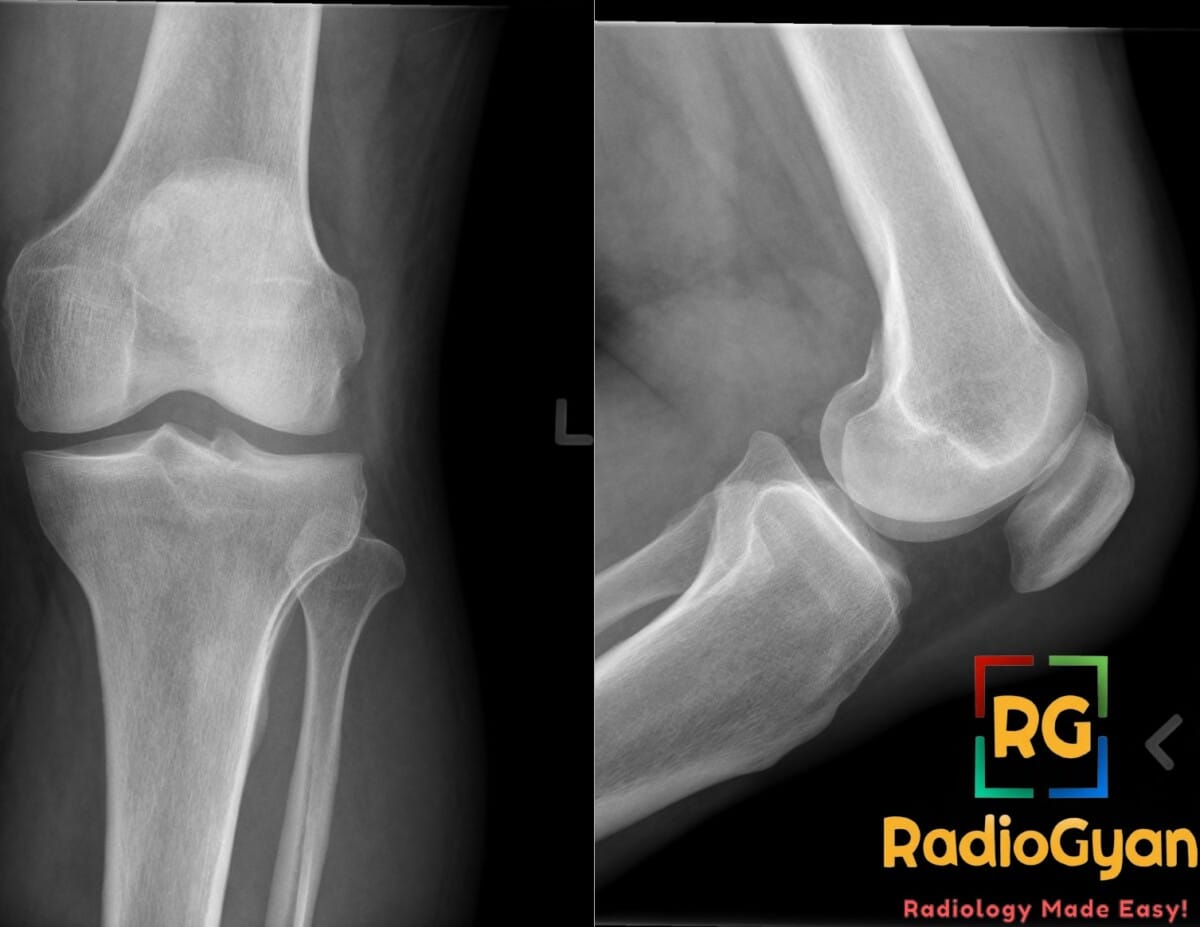
- Clinical: Adults; often males with repetitive kneeling or trauma; anterior knee pain, swelling, erythema, tenderness localized over the prepatellar area; risk factors include occupations requiring frequent kneeling (e.g., housemaids, carpenters); called “housemaid’s knee” from chronic prepatellar bursa irritation
- Etiology/Pathophys: Inflammation of the prepatellar bursa due to repetitive trauma, direct contusion, infection (septic bursitis), or chronic irritation causing accumulation of fluid and inflammatory cells between skin and patella
- Radiograph: Soft tissue swelling anterior to the patella; possible amorphous or punctate calcifications in bursal region; no bony abnormalities or periosteal reaction unless chronic degenerative changes coexist; bony structures usually preserved
- US: Anechoic or hypoechoic fluid collection superficial to the patella with distended prepatellar bursa; possible septations; absence of tendon tears; no Doppler flow within fluid but increased peri-bursal vascularity may be present
- CT: Fluid attenuation collection anterior to patella within prepatellar bursa; soft tissue thickening; absence of bone erosion; may depict complex septated fluid if chronic
- MRI: Oval or lentiform T2 hyperintense fluid collection localized between skin and patella in prepatellar bursa region; may show septations, peripheral enhancement if inflamed; no patellar marrow edema unless concurrent trauma; normal patellar tendon
- Signs: Prepatellar soft tissue swelling indicating bursitis; “Housemaid’s knee” correlates with localized anterior swelling; no classic named imaging signs but fluid collection consistent with bursal distension
- Frameworks: No formal classification system; differentiation into acute vs chronic and aseptic vs septic guided by clinical and lab findings; imaging used to assess extent of fluid and rule out other pathology
- DDx: Septic bursitis (may show increased Doppler flow, clinical signs of infection); prepatellar soft tissue abscess (complex, irregular fluid); cellulitis (diffuse soft tissue edema without defined fluid collection); synovial cyst (different location); tumors (solid mass, irregular borders)
- Tx: Conservative with NSAIDs, rest, avoidance of kneeling in aseptic cases; aspiration for diagnostic and therapeutic purposes; antibiotics if septic; corticosteroid injection in chronic aseptic bursitis; surgical bursectomy if refractory

Improve Content And Help Your Colleagues!
Found an error in the post? Please let us know using our contact page and we will update it with due credits!
If you wish to contribute radiological images for this case (or any other article on the website), you can submit them here and you will be duly credited: Submit radiology case