


What causes the John Thomas sign in pelvic X-ray imaging?
Let me know in the comments.
Click to reveal the answer
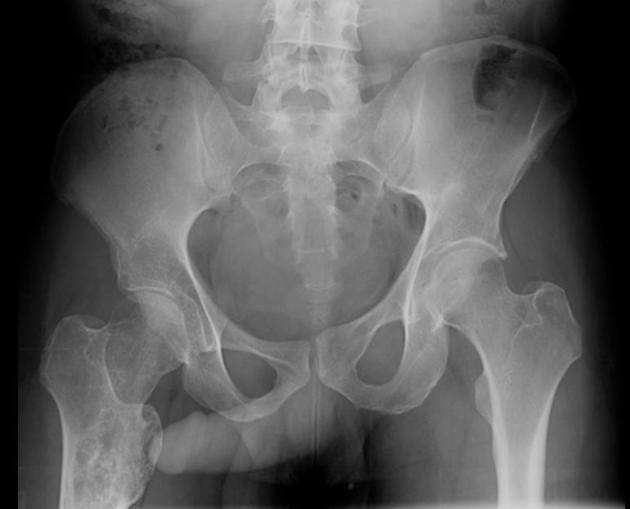
The John Thomas sign refers to the position of the penis on a pelvic X-ray in relation to a unilateral pelvic or hip pathology, such as a hip fracture. It is considered “positive” when the penis points toward the side of the pathology and “negative” when it points away. This phenomenon is thought to result from a patient’s unconscious attempt to lie on the injured side to reduce pain and immobilize the fracture, causing the penis to incline downward toward the affected side. Clinically, however, the sign has no reliable diagnostic value and is no better than chance at localizing pelvic or hip injuries.
Why is it called so?
The name “John Thomas sign” (also known as the Throckmorton sign) is a colloquial and informal term referring to the male genitalia, specifically “John Thomas” being a euphemism for the penis. The sign is so named because it describes the orientation of the penile shadow on pelvic X-rays in relation to ipsilateral pathology.
Pathophysiology
The sign arises due to patient positioning and unconscious protective behavior—patients tend to lie on the injured side to mitigate pain and stabilize the injury, which causes the penis to point downward on the side of injury. This positional effect is projected radiographically as the shadow of the penis pointing toward the abnormality on the pelvic X-ray.
Alternative names: Throckmorton sign
Other associated named signs: None

Improve Content And Help Your Colleagues!
Found an error in the post? Please let us know using our contact page and we will update it with due credits!
If you wish to contribute radiological images for this case (or any other article on the website), you can submit them here and you will be duly credited: Submit radiology case